Why finding the right payment processor is a challenge
Payment coverage tends to become urgent only after a route starts failing, a decline pattern appears, or finance cannot reconcile a settlement file cleanly. By the end of this process, you should have a usable requirements document. You should also have a vetted provider shortlist and an orchestration layer that lets you manage more than one payment path without turning integrations into your core product work.
High-risk merchants can secure suitable payment processing by understanding their specific needs, researching compliant providers, and using payment orchestration platforms to manage multiple connections efficiently. The friction is real because high risk merchant payment processing is shaped by the business model and chargeback exposure. Settlement needs, provider risk appetite, and technical acceptance behavior also matter more than a generic checkout checklist.
Prerequisites: what you need before you start
Once the problem is clear, preparation becomes the first control point. You cannot evaluate a high-risk merchant payment processing setup properly if your team only has a website URL, a target approval rate, and a monthly volume estimate. A provider, acquirer, or payment orchestration platform needs enough operational detail to understand the risk and the integration work.
Put the basics in one place. Include legal entity details, processing history, chargeback ratio, refund pattern, average ticket size, and expected volume. Add countries served, settlement currencies, payment methods, descriptor requirements, and current provider connections. Add the technical constraints too, including checkout stack, API access, reporting needs, webhook handling, reconciliation format, and who owns engineering work.
If you already work with one or more PSPs, document what each connection does well and where it fails. The Provider Connection Readiness Checklist is useful here because the goal is not a polished vendor file. The goal is a working map of existing payment coverage and missing backup capacity, plus the integrations your team can handle without slowing the core business.
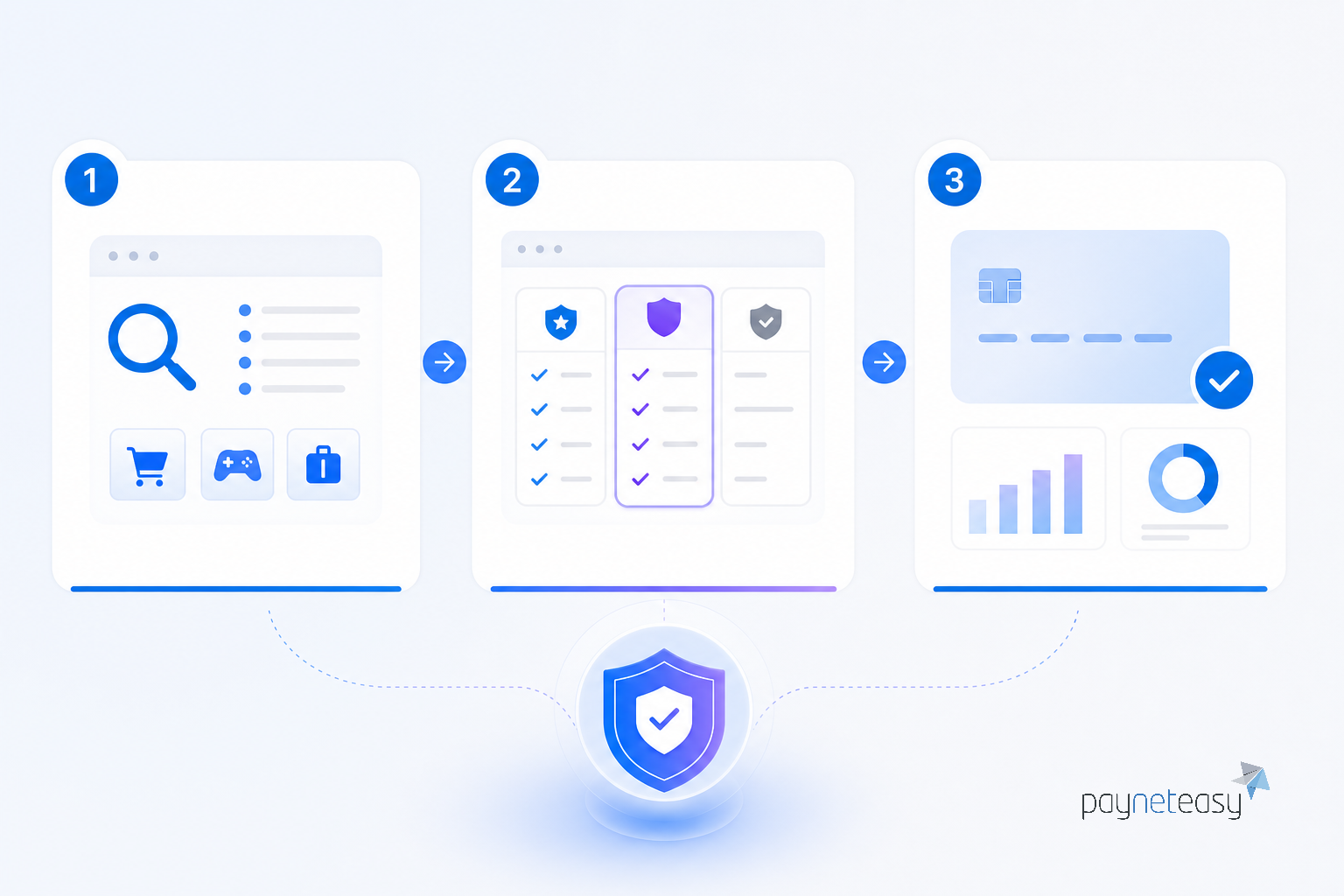
Step 1: define your high-risk profile and processing needs
With the preparation in place, define the exact payment problem before you speak to providers. A merchant labeled high risk for chargeback exposure has a different payment operations problem from one labeled high risk because of licensing, cross-border traffic, subscription billing, or digital goods delivery. If those situations get treated as the same issue, the provider questions become too vague, and the answers will be too.
Start with a short risk profile that a payment leader, finance lead, and technical lead can all use. Keep it factual. State what you sell and where customers are located. Explain how customers pay, how recurring billing works if applicable, what your current chargeback position is, and which countries, currencies, and payment methods are material to revenue. Then add processing requirements: target volume, peak periods, expected routing logic, settlement reporting, reconciliation needs, and backup route expectations.
Your technical requirements need the same precision. If your payment flow needs cascading, routing by country, routing by card BIN, retry logic, or provider-specific decline code analysis, write that down before vendor calls. If the business needs high throughput, use exact capacity assumptions instead of broad language. Payneteasy’s platform can handle up to 10 million transactions per day, but that capacity only helps if you already know your own peak and average transaction patterns.
By the end of this step, you should have a one-page requirements document. It should show live payment paths, missing paths, and routes that need fallback routing. It should also identify reporting gaps that create operational risk.
Step 2: identify and vet compliant payment providers
Once the requirements are defined, the shortlist can be built against real operating needs rather than sales material. Price matters, but for high-risk payment operations it should not be the first filter. A low headline rate will not help if the provider does not support your category, cannot handle your target geography, gives weak reporting, or leaves your team with a fragile direct integration that breaks when provider software changes.
Shortlist providers and acquirer connections that explicitly support your merchant category and operating countries. Ask about onboarding evidence, prohibited activity rules, settlement timing, reserve policy, and chargeback handling. Also cover supported payment methods, API maturity, webhook behavior, reporting files, and decline code visibility. Your list of questions to ask providers should be tied to your risk profile, not copied from a generic procurement template.
Compliance and operating maturity sit beside commercial fit. If you place a payment technology layer above your provider connections, PCI DSS scope and data handling practices become part of the evaluation. Payneteasy is PCI DSS Level 1 compliant and has over 20 years serving payment businesses worldwide, which is relevant when the payment infrastructure has to sit between active merchant traffic and multiple provider connections.
Payneteasy provides payment gateway and orchestration technology. It does not provide merchant accounts, act as an acquirer or hold merchant funds. Merchant approval and settlement terms remain with the relevant payment providers.
The output of this step is a shortlist, not a final winner. Map each provider to a purpose: primary route, country-specific route, payment method route, backup route, or test route. That framing keeps the project focused on more live coverage and controllable payment flows.
Step 3: implement a payment orchestration layer
After the provider shortlist is in place, the work shifts from selection to control. Direct integrations can work when you have one provider and a stable flow. They become a standing engineering workload when the team needs multiple PSP and acquirer connections, fallback routing, reconciliation across files, and a way to diagnose payment performance without waiting for each provider to respond.
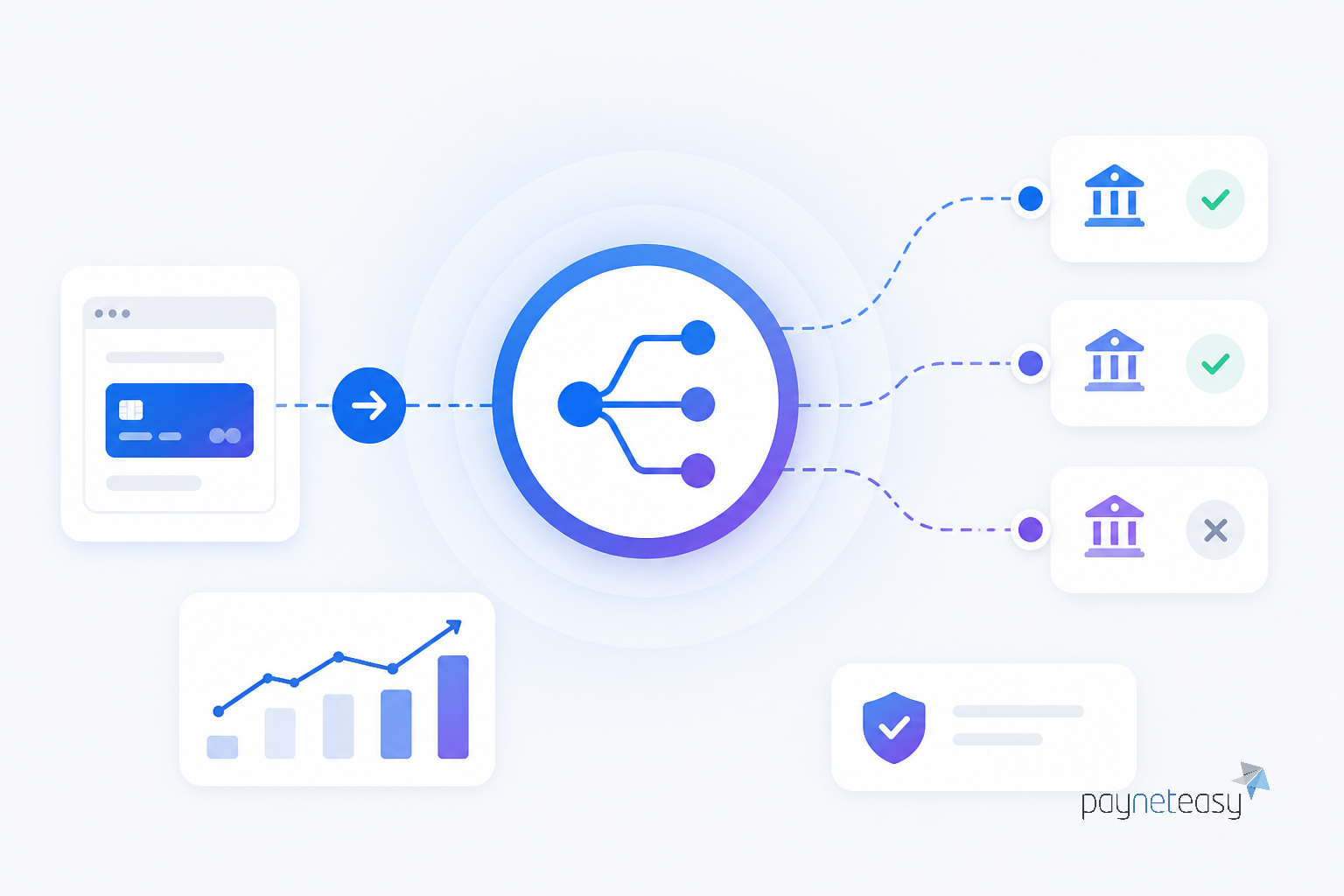
A payment orchestration layer gives you one operational layer above your selected providers. The reason is straightforward: high-risk merchants need payment coverage that is already connected and tested before a provider issue affects live revenue. It also has to be manageable during live traffic. The method is practical. Connect approved providers into an orchestration setup and define routing rules. Configure fallback routing only for eligible transactions and approved provider connections, with safeguards against duplicate charges and retries that are not permitted by provider or card-scheme rules. Normalise reporting and monitor approval rate patterns by provider, route, country, card BIN and decline code.
Payneteasy has more than 1,000 integrations. The timeline for connecting a selected PSP depends on whether the integration already exists, documentation availability, testing and provider readiness. Its payment orchestration platform is used to manage providers, payment flows, acceptance, and cost across an active setup. If you need the conceptual split before designing your architecture, the Payment Orchestration vs. Gateway guide helps separate the gateway role from the orchestration role.
Implementation should follow a controlled order. First, connect your current payment path and prove that authorization, capture, refund, webhook, settlement, and reconciliation behavior match your existing operations. Then add one backup route and run low-volume traffic through it. Add more routing rules only after reporting and settlement match.
Reporting is part of production readiness, not a side task. A route that approves transactions but creates settlement ambiguity is not production-ready. Done properly, your orchestration layer should support routing and reconciliation. It should also support reporting, uptime monitoring, and controlled expansion of payment coverage.
Troubleshooting common high-risk integration issues
Even with a solid plan, implementation issues still appear. The first sign is usually not a full outage. More often, a new route has a weaker approval rate than expected, decline codes cluster around one country or BIN range, a settlement file does not match internal reporting, or a backup route exists on paper but cannot safely take traffic.
Start with isolation, not traffic movement. If approval rate drops on a new route, compare by provider, country, card type, card BIN, amount, issuer response, and decline code before changing routing rules. If the issue appears only on one provider connection, check request formatting, authentication parameters, supported transaction types, and provider-side configuration. If the issue cuts across providers, review checkout fields, risk rules, 3-D Secure behavior, and whether the same customer segment is being routed through each path.
For settlement mismatches, confirm time zones, settlement cutoffs, currency conversion rules, transaction status mapping, refunds, chargebacks, and partial captures. Then reconcile orchestration reporting against provider files before finance closes the period. Reconciliation and issue diagnosis are operating workflows, and they need ownership.
To tell whether the step worked, look at the backup route first: it should be live and tested. Reporting should explain route-level performance, and settlement should reconcile without manual guesswork. If any of those fail, keep volume low until the cause is clear.
Your next step: a resilient payment infrastructure
With the orchestrated setup live, success is not a claim about one perfect provider. It is a payment infrastructure where the primary route is not the only workable route. The backup route is connected before a payment issue, and the payment team can see why performance changes before moving traffic.
The next task is active management. Use reporting to tune routing rules and watch approval rate changes by segment. Keep provider connections aligned with settlement and reconciliation needs. A deeper guide to payment routing optimization can help once the foundation is stable.
The trade-off is clear. Orchestration adds an operating layer that has to be governed. In return, the payment team gets more live payment options and clearer diagnosis, with less dependence on emergency integration work when coverage is already under pressure.