How to use your checklist for a production-ready payment connection
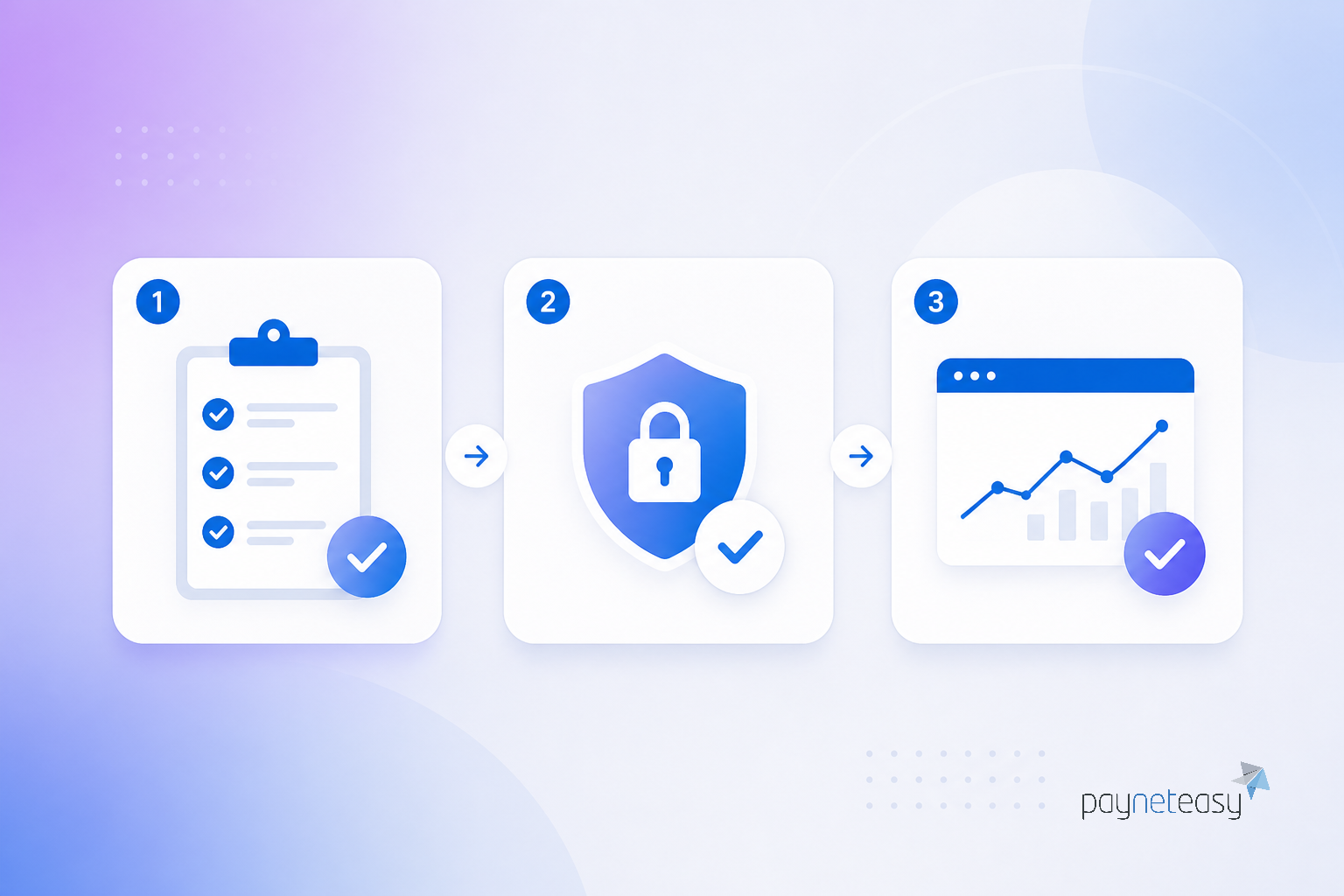
A new provider connection usually starts under pressure. A merchant needs another payment path, an acquirer connection must be ready as backup capacity, or payment operations needs a fallback route before the next payment issue reaches live traffic. To ensure a new payment provider connection is ready, test functionality and security first, then validate performance and compliance against a structured checklist before production traffic uses it.
The target is practical. The connection must handle authorization and capture, process refunds, support reporting and reconciliation, and fail safely under the same controls you expect from the rest of your payment infrastructure. Use this PSP provider connection readiness checklist after commercial access and credentials are in place, with technical documentation and internal ownership already agreed.
Prerequisites for testing a new provider connection
Before validation starts, gather the resources and owners that make the test meaningful. A readiness test fails early when the high-risk PSP treats it as an engineering-only task. Engineering owns connector behavior, but payment operations owns how live traffic behaves. Risk and reconciliation need a clear view of the change. Reporting, support, and merchant onboarding need the same clarity once the route is active.
Technical and team access
Confirm sandbox and production credentials, provider documentation, endpoint access, and callback configuration. Also confirm authentication settings and permission to submit test traffic. Your team needs access to gateway logs and routing rules. It also needs chargeback and dispute tooling where relevant, settlement files, reconciliation exports, and the internal ticket queue used by payment operations.
Required tooling and documentation
Prepare a test card and payment method matrix, plus a transaction scenario list. Add expected status mapping, error-code mapping, and a rollback path. Include the merchant category and currency coverage. Also include country coverage and payment method assumptions that matter for the first live cohort. In regions where payment behavior shifts quickly, payment coverage can change the traffic mix you need to validate. The World Bank reported that fast payments accounted for nearly 45 percent of digital payments volume in Latin America and the Caribbean, up from 2 percent in 2017.
Key stakeholder alignment
Name one accountable owner for go-live approval. Also define who can pause traffic and who can change routing. Make clear who reviews settlement mismatches and who handles merchant communication if authorization behavior differs from the existing payment flow.
Step 1: execute core functional tests
With the prerequisites in place, start with core transaction functionality. This comes before load, security, or operational checks because every later test assumes the connection can move a payment through its basic state path without losing transaction identity. It also must preserve amount, currency, and merchant reference data.
Test authorizations and captures
Start with the happy path, but do not stop there. Run successful authorizations and declined authorizations. Then test full captures, partial captures if supported in your flow, and delayed captures if your merchants use them. For each transaction, compare what the provider returns with what your white-label payment gateway records. At minimum, the transaction ID and provider reference should be visible without manual reconstruction. The same is true for amount, currency, merchant account, payment method, status, response code, and timestamp.
A useful test record can be this plain:
Scenario: successful authorization and capture
Expected gateway status: captured
Expected provider status: settled or captured, based on provider terminology
Required fields: merchant_id, order_id, provider_reference, amount, currency, response_code
Test refunds and voids
Refund and void behavior exposes weak mappings quickly. Run full refunds and partial refunds if they are part of your merchant offering. Test authorization voids before capture, then test refund attempts against transactions that should not be refundable. The goal is to confirm the money movement and the operational state together. A refund that succeeds at the provider but remains pending in reporting creates support load and reconciliation noise.
Verify transaction status and data
After each scenario, compare gateway status with provider status. Then check the callback payload, reporting export, and reconciliation data. Status naming can differ between systems, so do not expect labels to match word for word. Expect the meaning to match. If "voided" on the provider side appears as "canceled" in your payment orchestration platform, document that mapping before traffic is routed.
Step 2: validate non-functional and performance requirements
Once the core flows work, test whether the connection stays stable under pressure. A provider connection can pass every single transaction test and still fail as a live backup route. Latency may spike, retries may duplicate transactions, or timeouts may leave payment operations guessing which side owns the final state.
Performance and latency testing
Test the connection at volumes that match the first live rollout and the backup route scenario it is expected to cover. That does not mean sending all production traffic through an unproven path. It means modeling the authorization bursts your operations team will face if the route becomes active during a payment issue. Include callback timing and reporting delays in that model.
Measure authorization response time and timeout rate. Track callback arrival time and status update lag separately. Keep separate notes for provider-side decline behavior and infrastructure errors. A normal issuer decline is part of the payment flow. A timeout or malformed response belongs in the technical readiness log. The same applies to a missing callback or repeated 5xx response.
Error handling and idempotency checks
Idempotency is where many test plans stay too shallow. Repeat the same request after a timeout and confirm the connection does not create duplicate charges or duplicate captures. Then test late callbacks and duplicate callbacks. Follow with malformed callbacks and callbacks arriving after your internal timeout window has already moved the transaction to a provisional status.
Your routing layer should treat these events predictably. If the provider connection is meant to support fallback routing, confirm that a failed attempt routes according to your configured rules and that the original transaction remains traceable. Do not rely on a dashboard color alone. Check logs and reporting output, then compare reconciliation output, because payment operations will use those records during an incident.
Step 3: confirm security and compliance postures
After functional and performance readiness are confirmed, verify the security and compliance controls. This step is not a legal review, and it should not be treated as one. It is the payment technology check that confirms the new connection handles data and authentication correctly. It also checks fraud controls and reporting duties in the way your PSP already requires for live traffic.
Start with data handling. Confirm that sensitive payment data is transmitted only through approved channels. Check that credentials are stored according to your internal security standard and that role access is limited to the people who need it. If your payment infrastructure uses PCI DSS Level 1 compliant technology, the provider connection should fit that operating model rather than create an exception the team has to remember later.
Then test authentication and risk rules. Run the cardholder authentication scenarios and fraud filters that apply to the first rollout group. Add the country rules, currency rules, amount limits, and merchant-level controls for that same group. For high-risk PSP operations, the wrong exception can affect approval rate and chargeback exposure, as well as support handling.
Reporting obligations also belong in this gate. For example, all EU PSPs have had EU cross-border payment reporting duties for transactional data since 2024. Your readiness checklist should confirm that the new connection preserves the fields your reporting process needs, including merchant and country fields, amount and currency, date, and transaction references.
Step 4: establish operational readiness
With the technical validation complete, prepare the operating model around the route. A connection is not ready because engineering can send a transaction through it. It is ready when payment operations can monitor and route to it. The team also needs to explain its behavior, reconcile its output, and remove or reduce traffic without waiting for a code change.
Monitoring and alerting setup
Set alerts for authorization failure rate and timeout rate. Add alerts for callback failure, status update delay, abnormal decline patterns, and settlement file delivery. Make the alert owner explicit. A payment operations team should know whether a spike belongs to the provider or issuer behavior. It should also know when merchant traffic quality, routing logic, or an internal gateway issue is the cause.
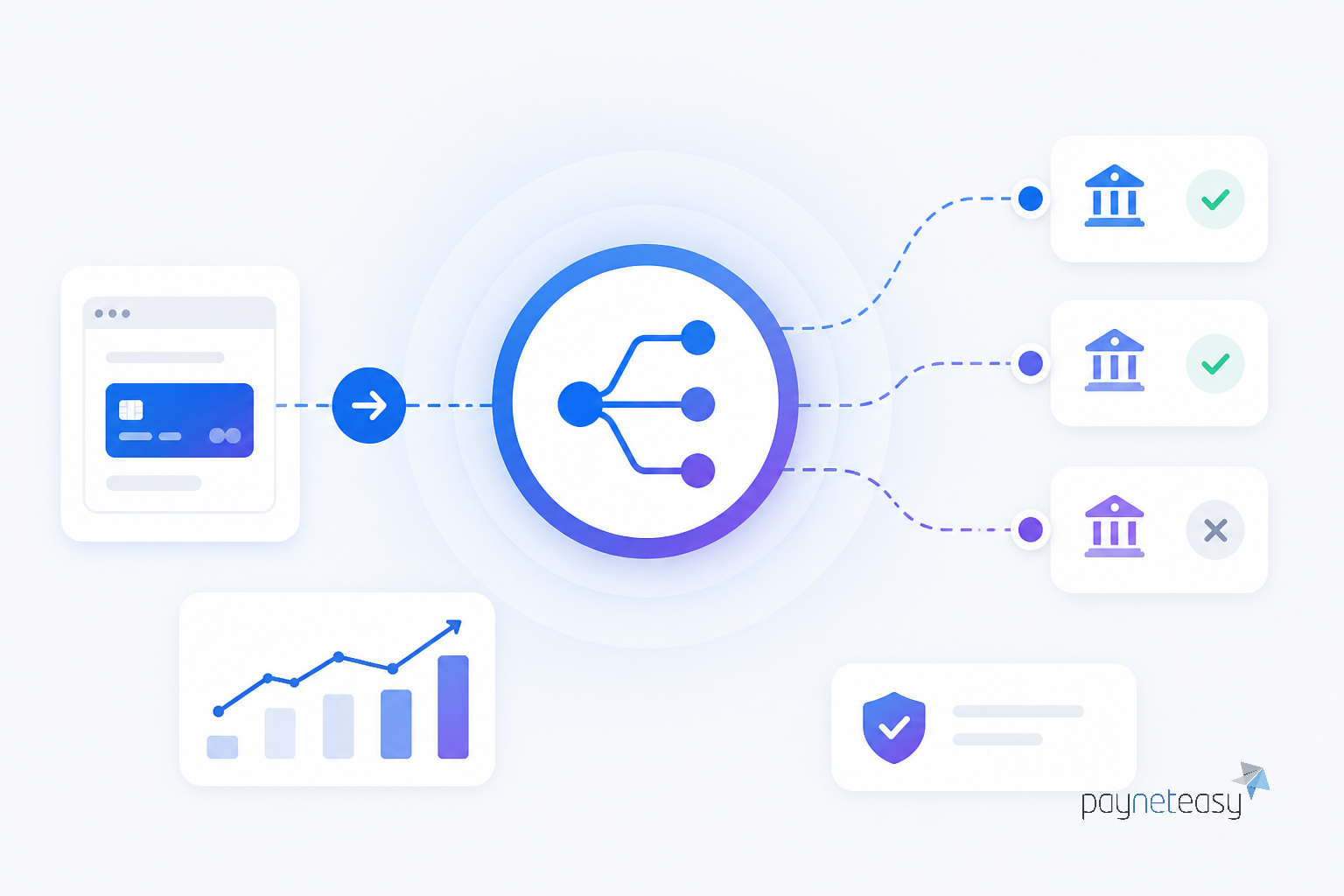
If the new route is backup capacity, test the alert path during a controlled run. Move a small share of eligible traffic, verify live monitoring, then return traffic to the original allocation. The point is to prove that fallback routing is manageable before a payment issue forces the decision.
Reconciliation and reporting procedures
Run end-to-end reconciliation before full rollout. Compare gateway records with provider records. Then check settlement files, refunds, chargebacks, and reporting exports. Any mismatch should have a known owner and a repeatable investigation path.
This is also where platform capacity matters. Payneteasy provides white-label payment gateway technology and a payment orchestration platform for high-risk PSPs, with Payment Channels designed to add a new PSP connection within 1 to 2 weeks. Its payment technology is PCI DSS Level 1 compliant, supports up to 10 million transactions per day, and has 99.95% verified uptime. Those metrics do not remove your readiness work. They define the operating baseline the new provider connection must fit.
Troubleshooting common connection issues
Even with a checklist, issues can appear once the team starts pushing real scenarios through the connection. Treat every defect as either a transaction-state problem or a data problem. If neither fits, check for a performance problem or an ownership problem. That classification keeps the team from chasing the wrong layer.
If transactions fail in the first functional test, compare the request payload against the provider documentation and your configured merchant profile. The common pattern is simple: currency or country does not match the provider's expectation. The same can happen with payment method, merchant identifier, or authentication parameter. If the provider shows success but the gateway shows pending or failed, inspect callback delivery, signature validation, and status mapping.
If reconciliation does not match, isolate the mismatch by lifecycle event. Check authorization and capture separately. Do the same for refund, void, chargeback, and settlement. A single reporting export can hide the real cause if the team reviews totals first. Start with one order ID and trace it across gateway logs and provider logs. Then follow it through settlement output and the reporting layer.
If performance breaks under test, separate slow provider responses from internal timeout settings. A route that times out too aggressively may create avoidable retries. A route that waits too long may damage checkout behavior and merchant support. The pass condition is not a perfect test run. The pass condition is that every failure mode has a clear status and owner, plus an alert and routing response.
Next steps: phased rollout and monitoring
Once the connection has passed the checklist, move into production with limits. Done means the provider connection has passed functional testing and performance checks. It also means security and compliance gates, operational monitoring, and reconciliation review are complete. The rollback and fallback routing path must also have been tested by the people who will use it.
Start with a narrow production cohort: one merchant group or one currency set. You can also limit the start to one region or one payment method family. Watch approval rate and declines. Track timeouts, callbacks, refunds, chargebacks, settlement, and reporting before increasing traffic. The honest trade-off is speed versus certainty. A high-risk PSP needs more live coverage, but a backup route only protects the business if it is connected and tested. It also has to be monitored and understandable before the incident.