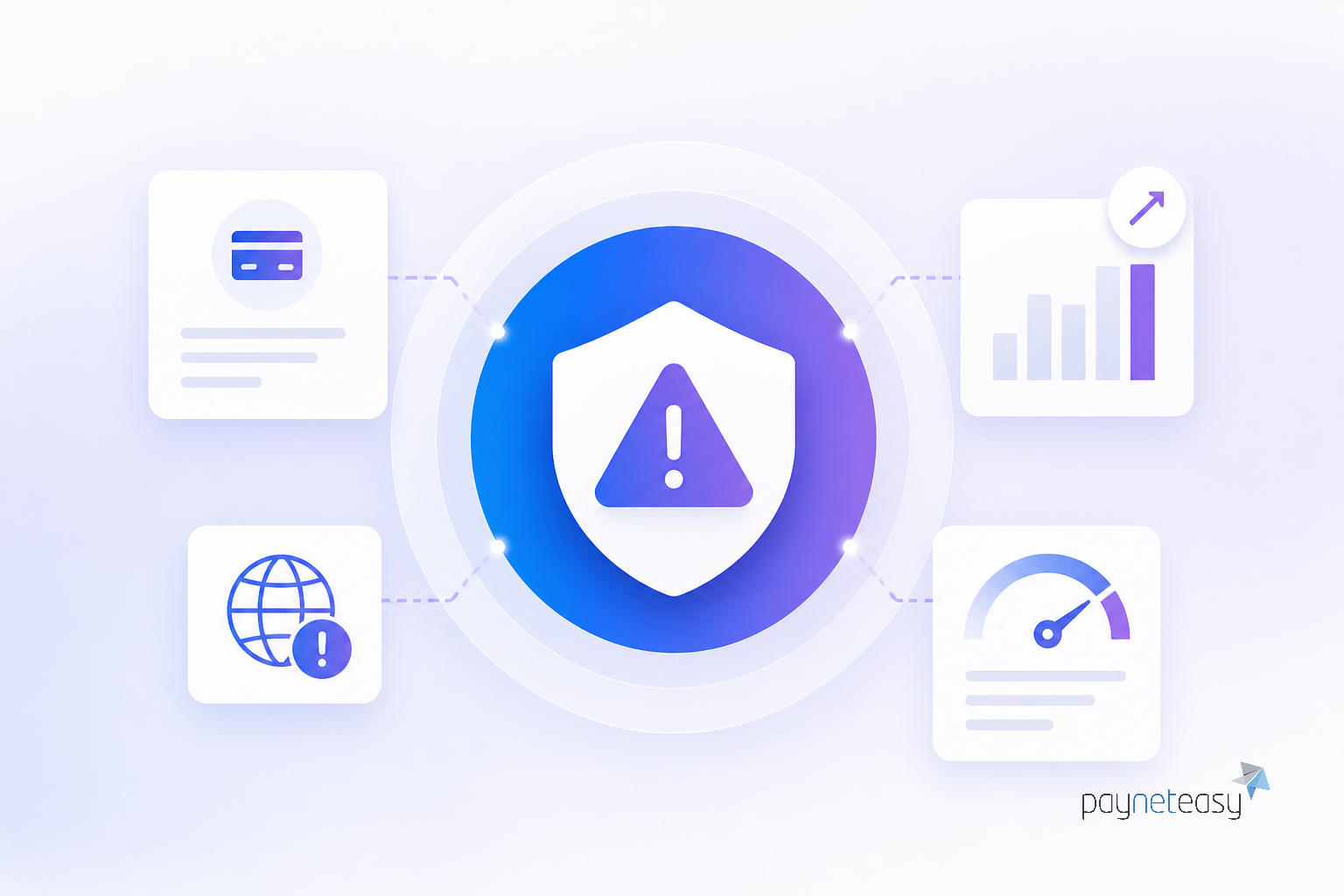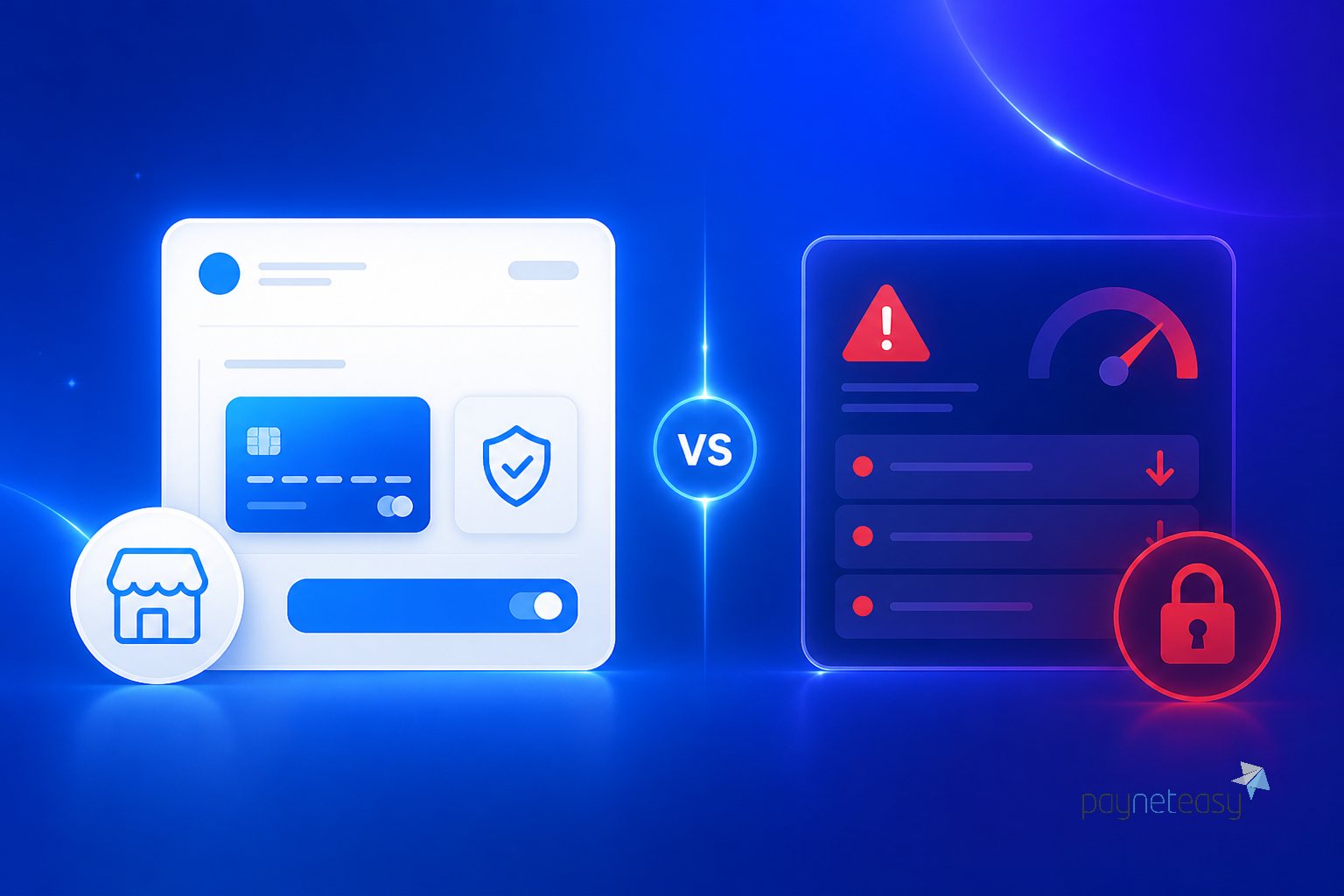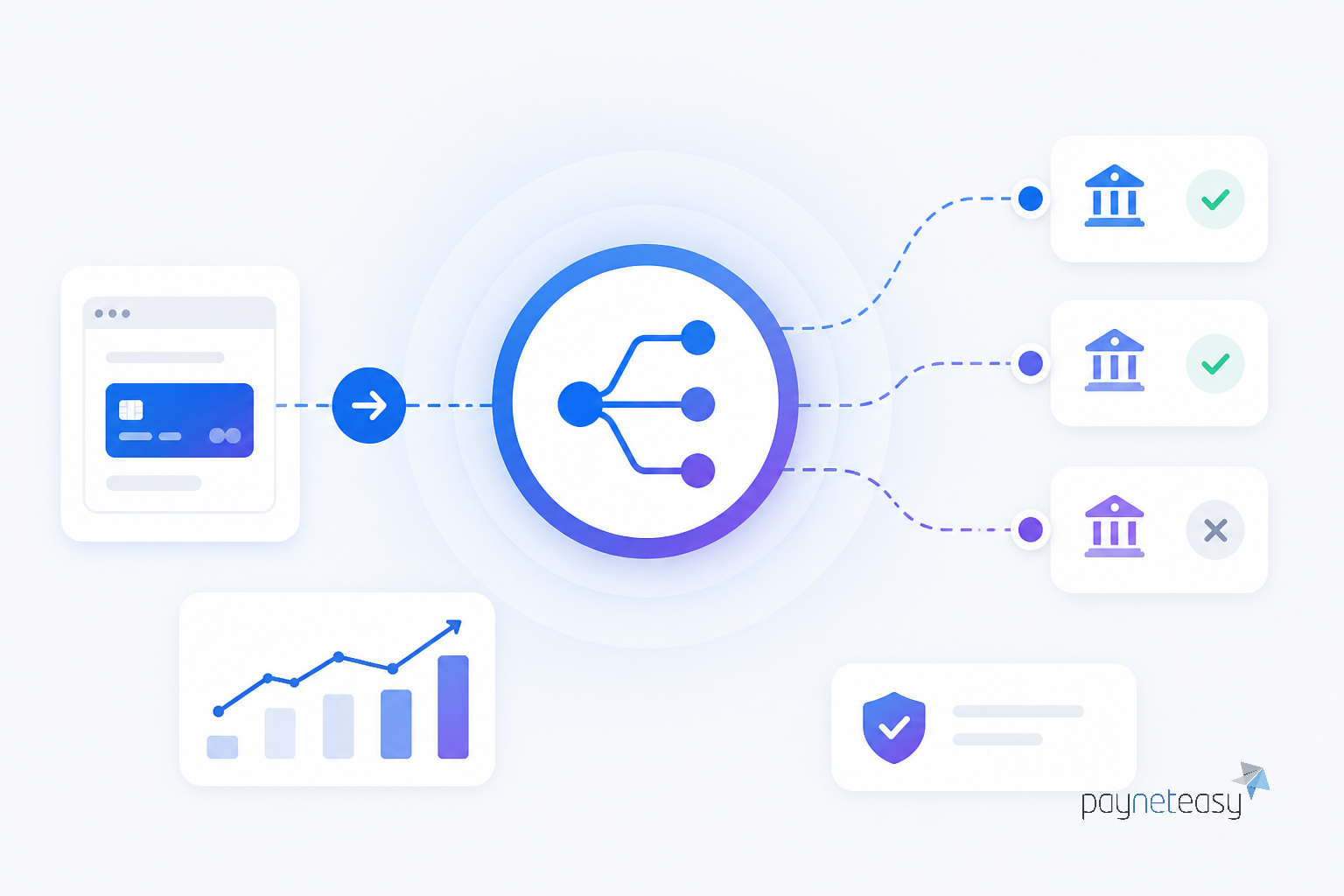
A high-risk online payment gateway transmits payment data and routes transactions to connected providers or acquirers. Depending on the platform, it may also provide fraud controls, reporting, and orchestration features. For a high-risk PSP, these tools help manage payment flows when chargeback exposure, provider availability, and settlement visibility all matter at the same time.
For a high-risk PSP payment leader, the trigger is usually practical. A merchant may need another payment path. An acquirer connection may be under pressure. Operations may need a fallback route ready before a payment issue turns into lost volume.
What is a high-risk online payment gateway?
A high-risk online payment gateway is a specialized payment gateway used by high-risk PSPs and high-risk merchants to authorize and route online transactions, then monitor and report them where ordinary payment coverage may be too thin. It does more than pass a card transaction from checkout to an acquirer. It gives the PSP a way to keep payment flows manageable when risk controls, chargeback exposure, provider availability, and settlement visibility all matter at the same time.
The role of a high-risk gateway
In a standard online payment setup, the gateway connects checkout to the payment infrastructure behind it. In a high-risk setup, that role becomes more operational. The platform must support several provider connections or acquirer connections. It also has to give payment operations enough reporting to understand what is happening and allow routing rules that reflect the merchant's risk profile, geography, payment method mix, and approval-rate targets.
For a high-risk PSP, this places the gateway inside a broader payment coverage model. It needs to support merchant onboarding and connected payment options while it manages payment flows and keeps backup routes ready. A fallback route only matters if it is live and connected before volume needs to move, with operations able to manage it. A document saying another route exists is not operational backup capacity.
What makes a business "high-risk"?
A business is treated as high-risk when its transaction profile creates more exposure for the payment chain. That can include higher chargeback pressure, fraud-sensitive sales, subscription billing, regulated activity, cross-border traffic, digital goods, gaming, online casino, forex, or other models where risks around approvals, disputes, and settlement require closer control.
The label is not a moral judgment on the merchant. It is an operating category. A high-risk merchant can be legitimate and still require tighter risk tools and more routing options, plus clearer reporting than a lower-risk merchant. For the PSP, the real issue is whether the gateway can support that operating reality without pushing every payment issue back to engineering.
Key terms for high-risk payment processing
Acquirer connection
A connection between the PSP's payment infrastructure and an acquiring bank or acquiring-side provider that can receive and process card transactions under the relevant commercial and risk arrangement.
Approval rate
The share of attempted transactions that receive approval. In high-risk payment operations, approval rate is affected by routing, authentication, fraud controls, acquirer behavior, issuer decisions, and the quality of transaction data.
Backup route
A live payment path that can accept traffic if the primary route has an issue. A backup route must be connected and tested before it is needed.
Cascading
A routing method that sends a failed or declined transaction attempt to another eligible route under defined rules. It must be controlled carefully because retries can affect risk, customer experience, and provider rules.
Chargeback
A transaction reversal made through the card scheme dispute process. High chargeback levels can affect a merchant’s acquiring relationship, so PSPs need reliable dispute reporting and workflows.
Fallback routing
Routing logic that moves payment traffic to another provider connection or acquirer connection when the intended route is unavailable, underperforming, or unsuitable for a given transaction.
Payment orchestration
A layer that manages multiple payment providers, acquirer connections, payment methods, routing rules, and reporting from one operating environment.
Reconciliation
The process of matching gateway transaction data, provider reports, settlement files, refunds, and chargebacks so finance and operations can trust the numbers.
Common payment challenges for high-risk businesses
Once the terms are clear, the pattern becomes familiar. A high-risk merchant rarely has one clean payment problem. The merchant may need more approvals, but tighter fraud controls can reduce acceptance. The PSP may need more acquirer coverage, while every added connection consumes engineering time and operational attention. A gateway that works only for the first live route can become a long-term constraint.
Increased chargeback ratios
Chargebacks are one of the strongest reasons high-risk merchants need specialized gateway controls. A chargeback is more than a lost sale. It creates operational work, affects reporting, can trigger provider review, and may influence whether the merchant keeps stable payment coverage.
For the PSP, chargeback management has to be visible at the payment-flow level. Operations needs to see which merchant and descriptor are involved, which route or acquirer connection carried the payment, and which geography or product pattern is creating dispute pressure. Without that visibility, teams end up treating chargebacks as isolated support events instead of signals inside the payment infrastructure.
Higher transaction scrutiny
High-risk transactions often receive closer review from fraud tools, providers, acquirers, and issuers. That scrutiny is useful when it limits exposure, but it can also create false declines or uneven approval rates if the payment flow is not tuned.
The gateway has to support risk controls without turning every transaction into a manual exception. Filters and authentication support need to align with velocity controls, routing rules, and reporting. If they operate as separate tools with separate logs, payment operations spends too much time reconstructing the issue after traffic has already been affected.
Limited acquirer and provider options
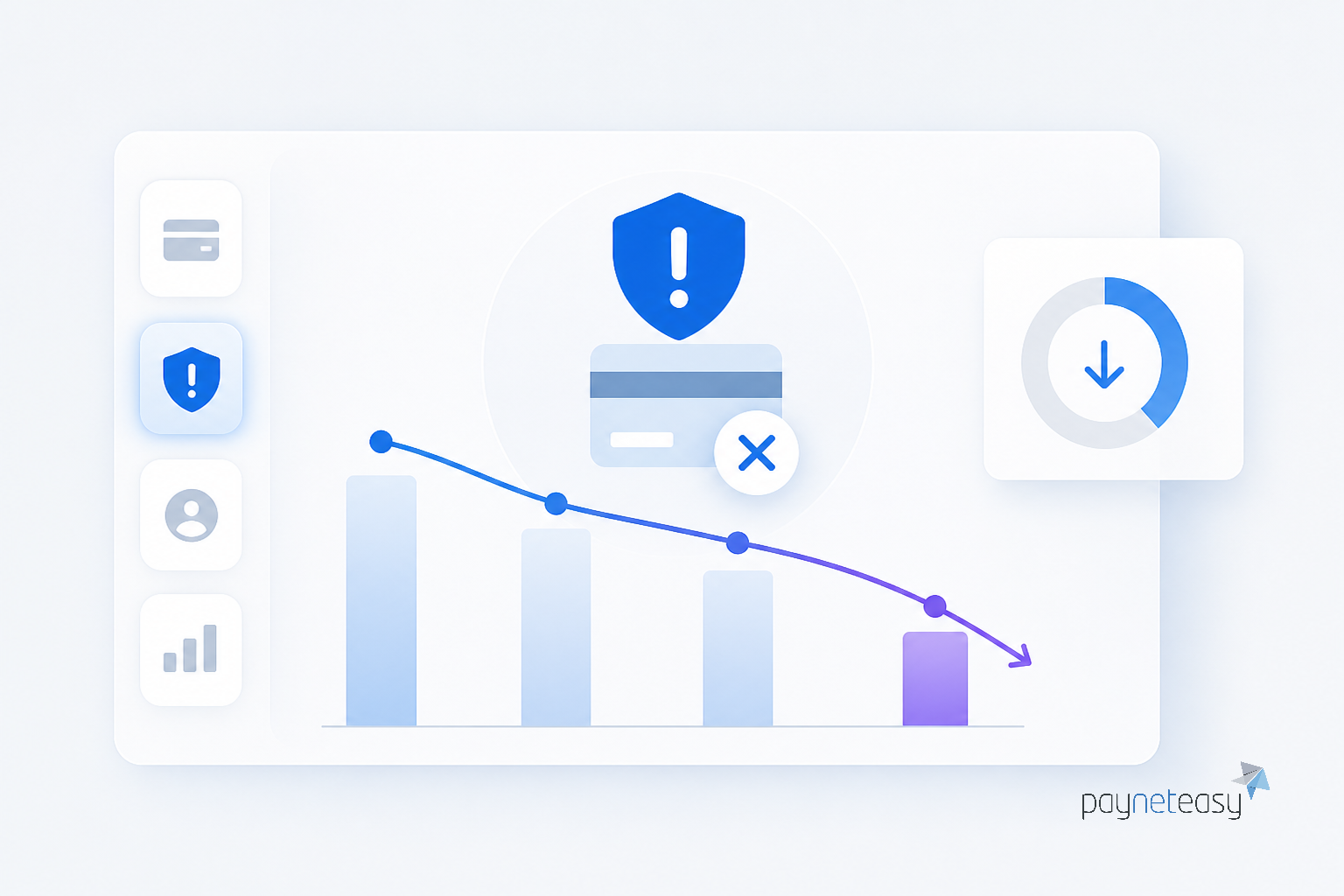
High-risk PSPs usually operate with a coverage mindset because a narrow payment setup creates exposure. If one acquirer connection is down or restricted, or is overloaded or underperforming for a specific merchant segment, the team needs another payment path ready.
The difficult part is that integration is only the first step. Each connection must be configured and verified, then monitored and made usable by operations. When integration capacity is limited, internal work can take months. That is why a high-risk online payment gateway should be evaluated as long-term payment infrastructure, not as a tool that only gets the first merchant live.
Essential capabilities of a high-risk payment gateway
Those operating problems point to the capabilities that matter. A specialized gateway should give a high-risk PSP more control over the full payment flow, from checkout handoff through authorization, fallback routing, dispute handling, reporting, and reconciliation. The strongest systems reduce avoidable manual work without hiding the details that operations needs.
Advanced fraud prevention tools
Fraud controls for high-risk payment processing must be configurable. A PSP may need different controls for a subscription merchant, a gaming merchant, a forex merchant, and a digital goods merchant. The gateway should support rules based on transaction value and velocity, geography and payment method, merchant history and customer behavior, plus other operational signals available inside the payment flow.
The goal is controlled acceptance. A high-risk PSP cannot promise fraud-free processing, and a responsible gateway should not encourage that claim. The better standard is practical risk control: screen what needs to be screened and apply stricter handling where the exposure is higher. The PSP also needs enough reporting to explain whether acceptance, decline, routing, or challenge was the outcome.
Fraud tooling also has to fit merchant onboarding. If every new merchant requires custom engineering work before sensible controls can be applied, the gateway slows the PSP's commercial process. Configurable risk settings and clear permissions help the operations team, as does merchant-level reporting, without asking developers to rebuild the workflow for each merchant.
Systematic chargeback management
Chargeback handling belongs inside the payment operations view because disputes connect directly to payment coverage. A gateway should help teams track chargebacks by merchant, route, transaction, descriptor, provider connection, and settlement context. The reporting should make dispute pressure visible before it becomes a larger coverage problem.
Systematic chargeback management also means the PSP can separate patterns from noise. A few isolated disputes may require support follow-up. A rising chargeback pattern on a specific payment flow may require routing changes, merchant review, descriptor checks, authentication changes, or tighter fraud rules. The gateway does not make that business judgment by itself, but it should give the PSP the data needed to make it.
The reporting model is the difference between a usable operations view and a file chase. If disputes, refunds, approvals, and settlements sit in disconnected exports, reconciliation becomes slower and less reliable. A high-risk gateway should help payment operations compare transaction-level events with the records finance needs for settlement and reporting.
Intelligent payment routing and cascading
Routing is where high-risk gateway technology moves from transaction processing into payment orchestration. The PSP needs to decide which route should receive a transaction and when a fallback route should be used, while avoiding overloaded or misused connections.
A useful routing setup can consider merchant and geography, currency and payment method, transaction type, provider availability, acquirer coverage, and operational rules. A cascading setup can then define what happens after a failed attempt. The details matter because uncontrolled retries can add risk and create customer friction or provider issues.
For a deeper operating view of route selection, the next useful reference is a guide to intelligent payment routing. The practical point is simple: routing should be a controlled operating function, not a hardcoded engineering patch.
A high-risk PSP should also look at how quickly new routes can become usable. Payneteasy reports more than 1,000 integrations, while its Payment Channels page states that a merchant can start using a PSP in 5 to 7 business days when documentation is ready upfront. The team still needs to verify that the connection is approved, configured, tested, and ready for the intended traffic. KPMG's research on partnering for payment modernisation makes the same point: new provider connections deliver value only when they are governed and operationally ready.
Benefits of a specialized high-risk gateway
The value of specialized gateway technology is operational control. A high-risk PSP needs more payment coverage and clearer visibility, with backup capacity that payment operations can manage without asking engineering to rebuild the setup every time the portfolio changes.
The first benefit is continuity. If a primary provider connection has an issue, the PSP can move traffic through a fallback route that has already been connected and verified. That does not remove the need to investigate the root cause, but it changes the order of work. Traffic continuity comes first. Root-cause analysis follows with less pressure.
The second benefit is better use of engineering time. High-risk PSPs keep adding integrations as normal business practice, but every custom connection and routing exception, along with each reporting workaround, can absorb technical capacity. A gateway that already supports many provider connections and routing rules, plus operational reporting, lets engineering focus on the payment infrastructure that actually needs custom work.
The third benefit is more consistent merchant onboarding. When onboarding depends on manual configuration scattered across teams, each merchant adds operational risk. A purpose-built gateway gives the PSP a repeatable way to configure payment flows and apply risk rules, while exposing reporting and preparing backup routes.
The fourth benefit is stability at scale. Payneteasy describes its white-label payment gateway technology as PCI DSS Level 1 compliant, with capacity for up to 10 million transactions per day and 99.95% verified uptime. Those figures do not remove the need to evaluate fit, but they show the type of operating metrics a high-risk PSP should ask any gateway technology provider to state clearly.
How to choose the right gateway provider
With the operating case established, selection depends on fit and control, as well as readiness. A high-risk online payment gateway should be evaluated against the PSP's live payment model, not against a generic checklist. The wrong choice often looks acceptable at launch and becomes restrictive when the PSP needs more acquirer connections and more payment options, with backup routes ready.
Start with coverage. Ask whether the gateway can support the provider connections and acquirer connections your merchant portfolio needs, and whether new connections can be added without turning every request into a long engineering project. For a high-risk PSP, the first live route is only the beginning of the payment network.
Then evaluate routing control. The gateway should let operations define routing and fallback routing in a way that reflects merchant risk and transaction type, as well as region, payment method, and provider availability. If every routing change requires code work, the PSP's ability to react to payment issues depends too heavily on engineering queues.
Reporting and reconciliation should come next. Payment operations needs to see approvals, declines, refunds, chargebacks, settlement records, and provider-level behavior in a format that supports daily work. Finance needs numbers it can reconcile. Risk needs patterns it can act on. A gateway that hides transaction detail behind thin reports will create work elsewhere.
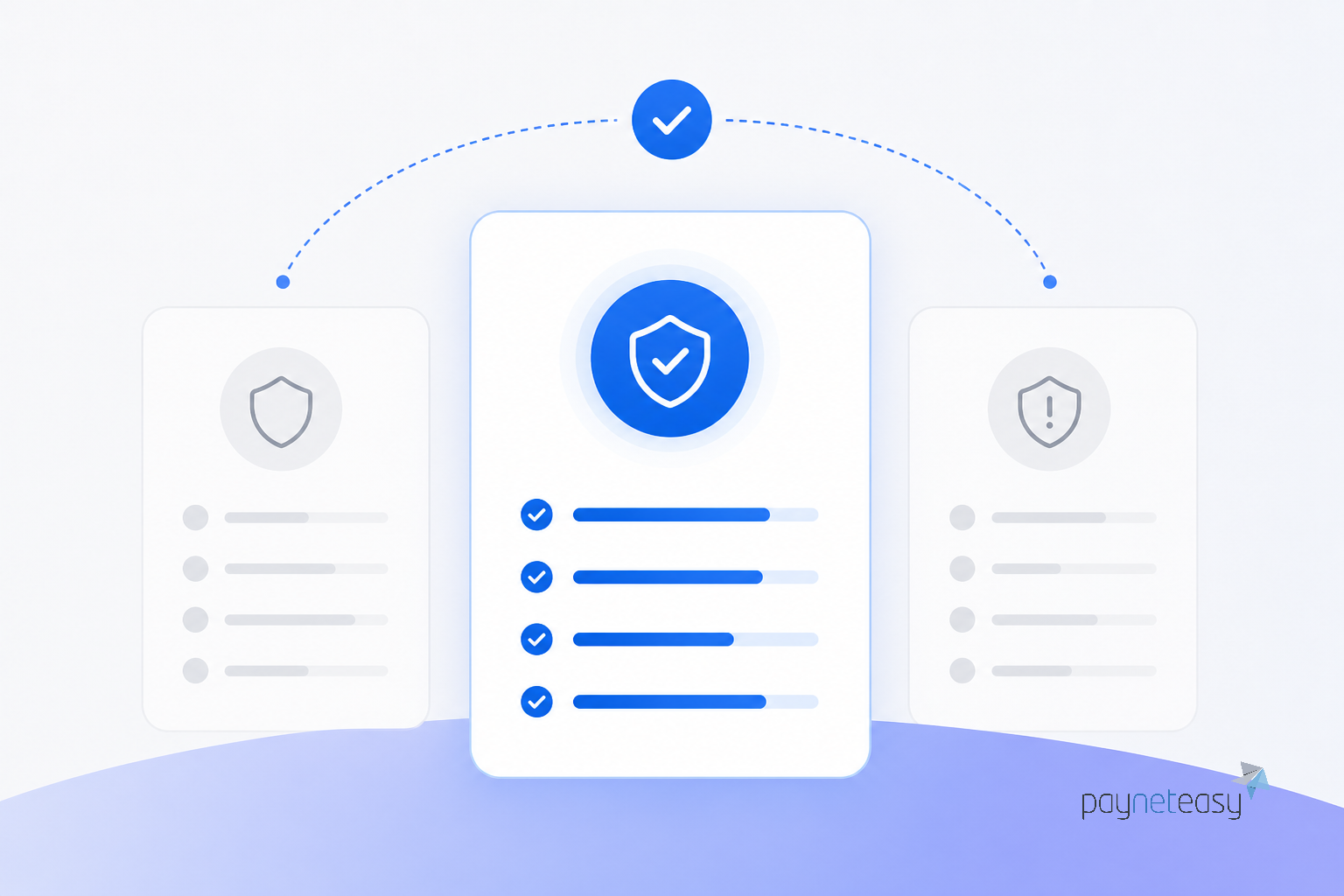
Security and compliance posture matter, but they should be handled as evaluation criteria, not as legal advice. Ask for the provider's security credentials, PCI DSS position, operational controls, permissions model, and data access rules. A responsible payment technology provider should be clear about what it provides and what remains under the PSP's own acquirer relationships, underwriting model, and merchant controls.
It also helps to assess provider connection readiness before a payment issue forces the decision. A backup route that is commercially approved but not technically verified may still fail when traffic needs to move. The useful standard is coverage that is live and connected, with testing complete and operations able to manage it.
Payneteasy has served payment businesses worldwide for over 20 years and provides white-label payment gateway technology, a payment orchestration platform, Payment Channels, 3DS Adapter, Leads Protection, and Tailor-Made Projects. For a high-risk PSP, the selection question is whether the platform gives your team enough coverage and visibility, plus control, to keep expanding the payment network without making each new merchant or route a one-off project.