What is multiple payment gateway integration?
Multiple payment gateway integration means connecting a merchant platform to more than one payment processor or gateway connection, then managing those connections inside one payment flow. For a high-risk PSP, the trigger is usually operational: a merchant needs more payment coverage, another payment path must be live, or the team needs a backup route before the primary route has a problem. For a high-risk merchant, the same need shows up as approval-rate pressure and regional coverage gaps, or as limited backup capacity. Multiple payment gateways can improve payment processing control and customer payment continuity, especially when a payment orchestration platform centralizes routing and reporting, plus fallback logic and provider connection management.
The idea sounds straightforward until the connection count grows. One direct integration can be treated as a contained engineering project. Several direct integrations become a permanent operating model, because each provider connection brings its own API behavior, decline messages, settlement files, reporting format, testing requirements, and change cycle. In KPMG's 2024 Modernising Payments survey of financial institutions and retailers, 57% of financial institutions identified integrating multiple systems as the hardest part of payments modernization. A merchant payment setup is narrower than a bank modernization program, but the pattern is the same: payment coverage improves only when the operational layer can absorb the extra complexity.
For high-risk PSP payment leaders, multiple payment gateway integration should not become a private payment technology company hidden inside the product roadmap. The goal is to keep PSP and acquirer connections active, observable, and manageable while protecting engineering time for the core platform. That takes more than adding API credentials to checkout. It requires a controlled layer for routing, fallback routing, reconciliation, and payment operations.
Why merchants use multiple gateways
Once the concept is clear, the practical question is why a merchant, or the high-risk PSP supporting that merchant, would take on the extra operating work. The reason is rarely theoretical. One payment path is often too narrow for the business's commercial needs and risk profile, along with its operating demands. In high-risk verticals, a single route can become a bottleneck when approval rate changes, a provider has technical instability, or regional coverage does not match the customer base.
Increase authorization rates
Authorization performance depends on the route, the issuer response, the transaction profile, and the way a provider handles a specific payment flow. A merchant cannot control every variable, but the payment team can control whether traffic has only one possible path. Multiple active gateway connections give payment operations more routes to test, compare, and manage. If technical acceptance drops on one route, the team can inspect the pattern before moving traffic. That matters because a decline pattern by country, card BIN, provider, route, or decline code may point to a specific technical issue rather than a general merchant problem.
The point is not to promise a fixed approval-rate increase. That would be unsafe. The practical value is optionality. A merchant can compare performance across active connections, apply routing rules, and avoid treating one provider's behavior as the only available outcome.
Provide redundancy and fallback routes
A backup route has value only when it is live and connected before a payment issue appears, with procedures the team can manage. Many merchants look for another payment option after the current path is already under pressure. By then, a direct integration project cannot protect the live payment flow quickly enough.
Multiple payment gateway integration gives the merchant payment team backup capacity, but only when the routing layer can use it. A backup route sitting outside the production payment flow is a contract, not operational coverage. A fallback route needs credentials, tested transaction types, reporting access, settlement visibility, and a clear rule for when traffic should move.
Expand regional payment coverage
Regional coverage is another common reason to add gateway and acquirer connections. A high-risk merchant may serve customers across several markets, while individual provider connections may perform unevenly by geography, issuer behavior, or currency support. A broader connection set lets the payment team align traffic with the routes that actually support the customer base.
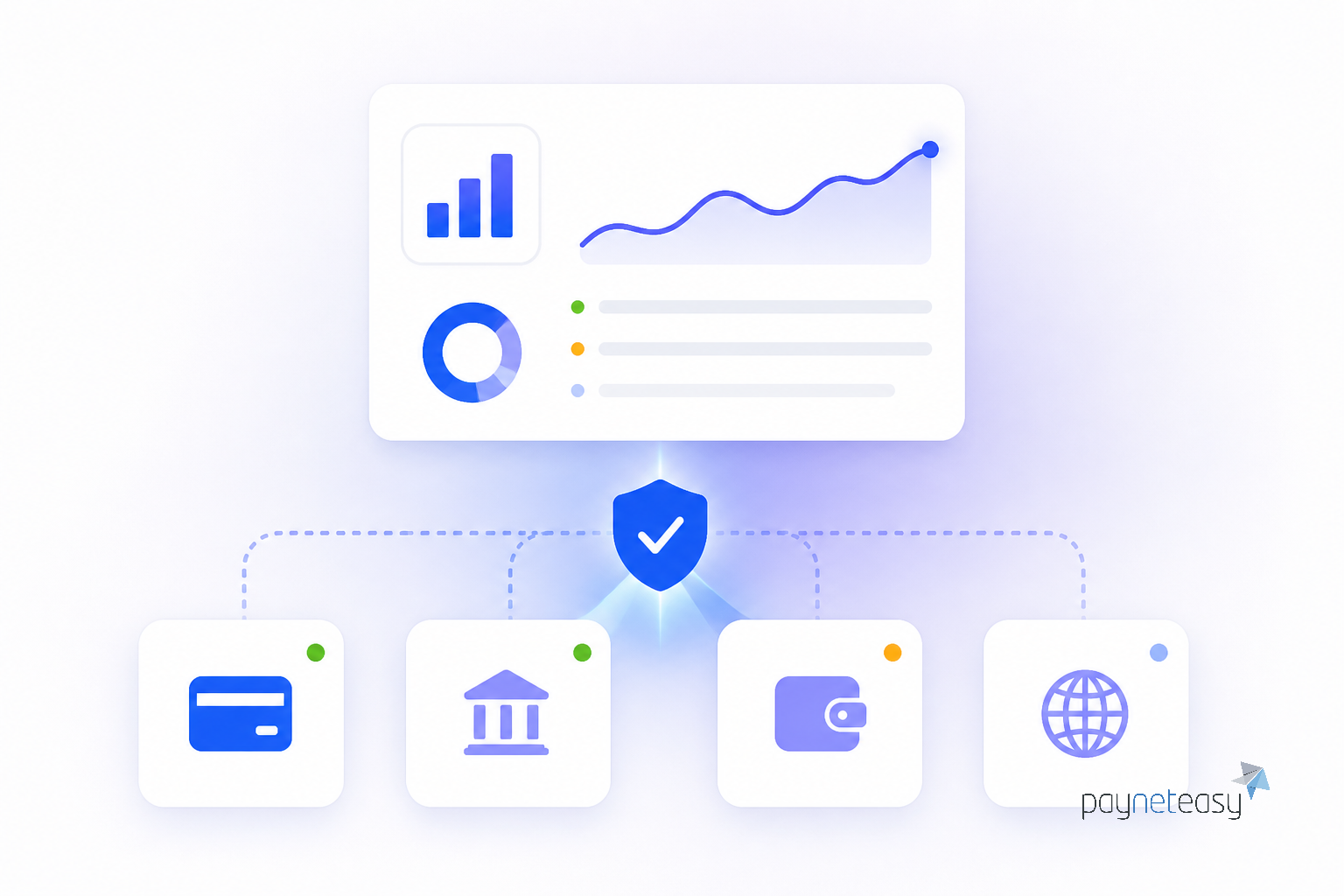
The trade-off is that every new connection adds operational surface area. So the real question is not whether multiple gateways are useful. It is whether the high-risk PSP or merchant payment team can manage them without turning payment integration into permanent product debt.
The challenge of direct gateway integration
Direct gateway integration looks clean on a project plan because every connection has a start date and a delivery date. In production, the work continues. Provider APIs change, reporting formats need mapping, reconciliation exceptions appear, decline codes need interpretation, and settlement data must be matched back to orders and payment attempts. The merchant's engineering team, or the PSP team supporting that merchant, becomes responsible for the connective tissue between checkout, risk controls, operations, finance, and every provider connection.
Fragmentation becomes expensive at that point. The same KPMG payments modernization research identified integration as the leading challenge for financial institutions, and shows why the issue is structural rather than cosmetic. Multiple systems create coordination work. Each system may be valid on its own, but the payment team still needs one operating view of the payment flow.
There is also a wider payment infrastructure concern. The IMF working paper Integrating Fragmented Networks: The Value of Interoperability in Money and Payments (June 2025) frames this as a trade-off: network effects can concentrate volume in a small number of dominant platforms, while too many competing networks fragment reach. Interoperability is offered as the way to get scale without depending on one dominant winner. A high-risk merchant does not need to solve payment network design, but it does need to recognize the same tension at its own scale. Too few connections create dependency. Too many unmanaged connections create operational disorder.
Direct integration often fails because it answers the wrong question. It asks, "Can we connect this provider?" The stronger operational question is, "Can we manage this provider inside the full payment flow?" That means the connection must support routing rules, fallback routing, payment status tracking, reconciliation, reporting, and chargeback visibility. If those controls remain scattered across several dashboards and internal scripts, the merchant has gained coverage but lost control.
The burden becomes heavier as the business grows. As the business adds countries, transaction volume, provider connections, and exceptions, engineering and payment operations face more demand. Without an orchestration layer, the high-risk PSP or merchant has to choose between slowing down new provider work and allowing payment infrastructure to become harder to govern.
Key terms for payment gateway integration
Before looking at orchestration, the language needs to be precise. These terms often get used loosely in vendor conversations, and loose definitions create avoidable mistakes in payment operations.
-
Payment gateway: the technology connection that sends transaction data from the merchant's checkout or payment system to the relevant provider connection for authorization and later payment operations.
-
Provider connection: the technical and operational link to a PSP, gateway provider, or related payment service used inside the merchant's payment flow. In merchant operations, this usually means credentials, API behavior, transaction status handling, reporting, and support procedures.
-
Acquirer connection: the connection path tied to acquiring coverage. It matters because authorization performance, settlement, and chargeback handling can vary by route and market.
-
Payment orchestration platform: the management layer above individual provider and acquirer connections. It coordinates routing, cascading, reporting, reconciliation, and operational visibility across the merchant's active setup.
-
Routing: the rule-based decision that sends a transaction through one available path rather than another. Routing may consider country, currency, amount, card BIN, provider status, or other operational criteria.
-
Cascading: a controlled retry or fallback process in which a failed or declined payment attempt can move to another configured route where appropriate. It must be managed carefully, because poor cascading logic can create duplicate attempts, confusing statuses, or risk issues.
-
Reconciliation: the process of matching transactions, settlements, fees, refunds, and exceptions across provider data and the merchant's internal records.
These definitions matter because multiple payment gateway integration is a control problem, not only a connection problem.
How payment orchestration solves integration complexity
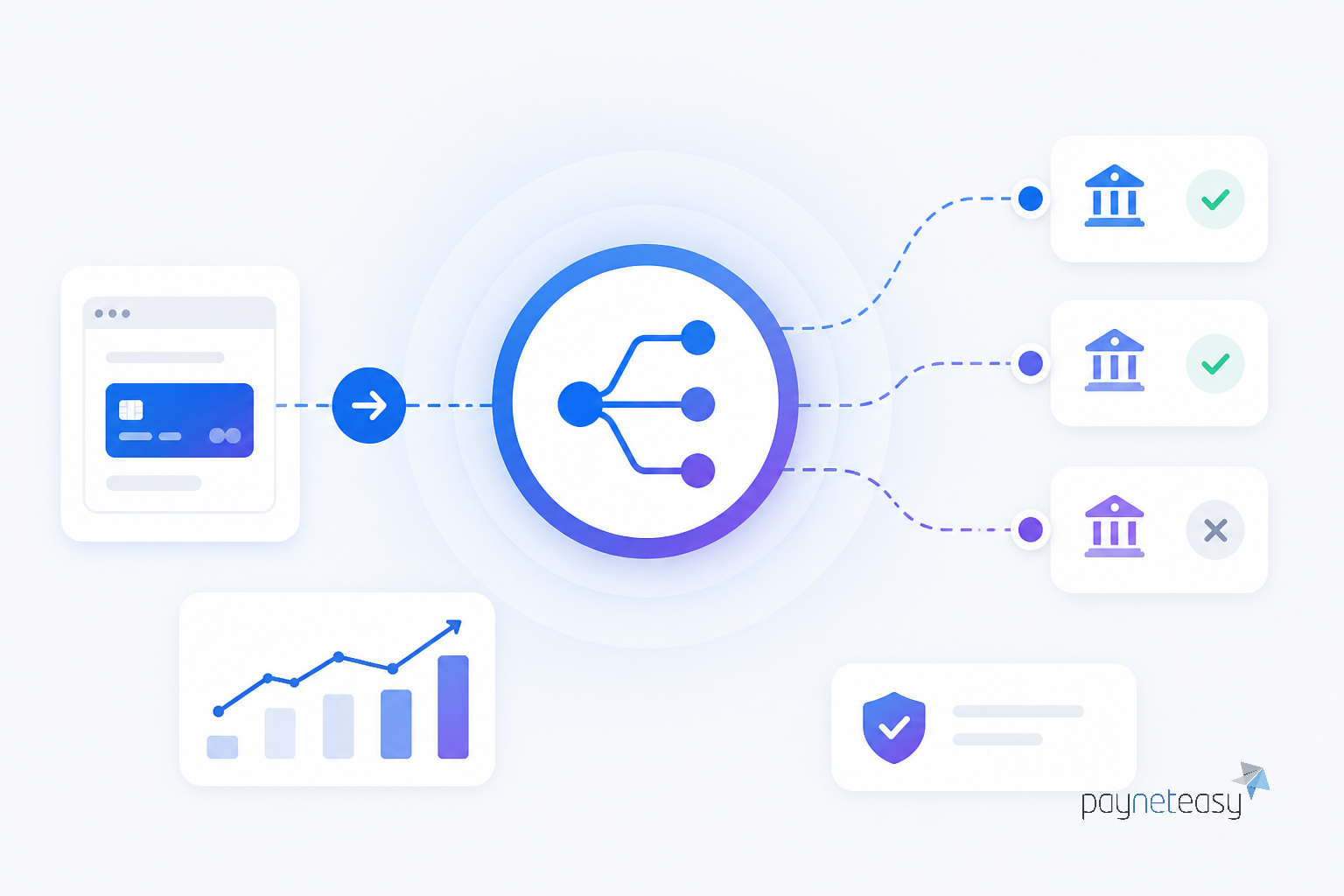
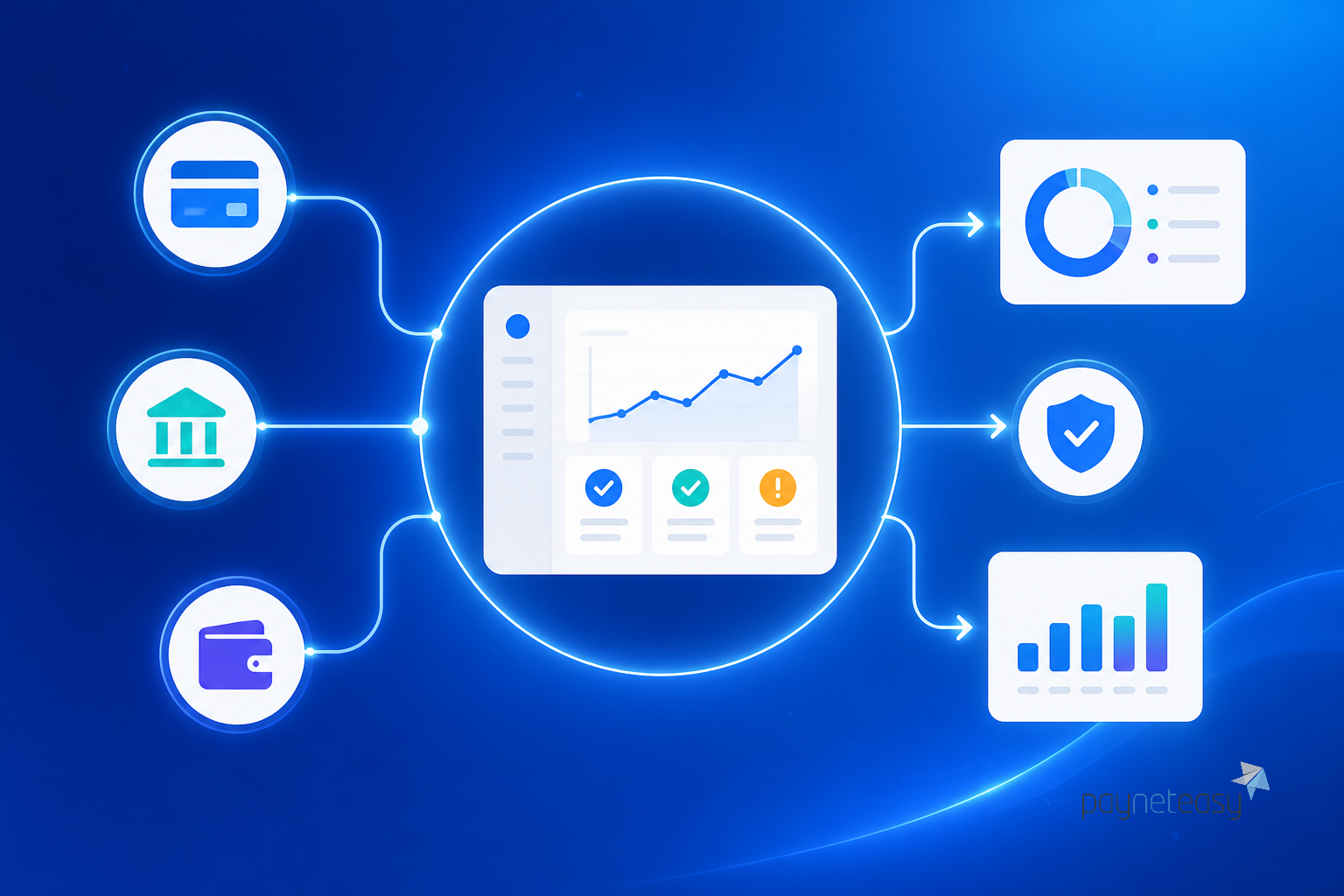
With the operating problem defined, the relevant technology layer is payment orchestration. A payment orchestration platform sits above individual gateway, PSP, and acquirer connections. Instead of forcing the merchant platform to maintain separate logic for every provider, the orchestration layer gives payment operations one place to configure payment flows, route traffic, monitor provider behavior, and manage exceptions.
The central idea is abstraction with control. The merchant still owns its commercial relationships and payment strategy, while the platform reduces the custom engineering required for each new connection. Standards work points in the same direction. The W3C Payment Request API specification standardizes an interface that allows merchants to use one or more payment methods with minimal integration, which reflects the same principle at browser API level: payment systems become easier to operate when common interaction patterns are handled through a consistent layer.
For high-risk merchants and the PSPs supporting them, orchestration is payment infrastructure rather than checkout convenience. The useful layer must support live provider connections, fallback routing, payment status control, reporting, and reconciliation. It must also handle volume without becoming the next constraint. Payneteasy supports more than 1,000 integrations and handles up to 10 million transactions per day, and has maintained 99.95% verified uptime over four years, which is the type of scale-and-reliability marker a payment leader should examine when assessing whether an orchestration layer can carry real production traffic.
A payment orchestration platform also changes the role of the internal engineering team. Engineers still need to integrate the merchant platform with the orchestration layer. They also need to define data flows and maintain clean internal order and customer records. But they should not need to rebuild every provider-specific behavior from scratch. Payment operations can then work with routing rules and provider performance, along with reconciliation outputs, without opening a development ticket for every payment-flow change.
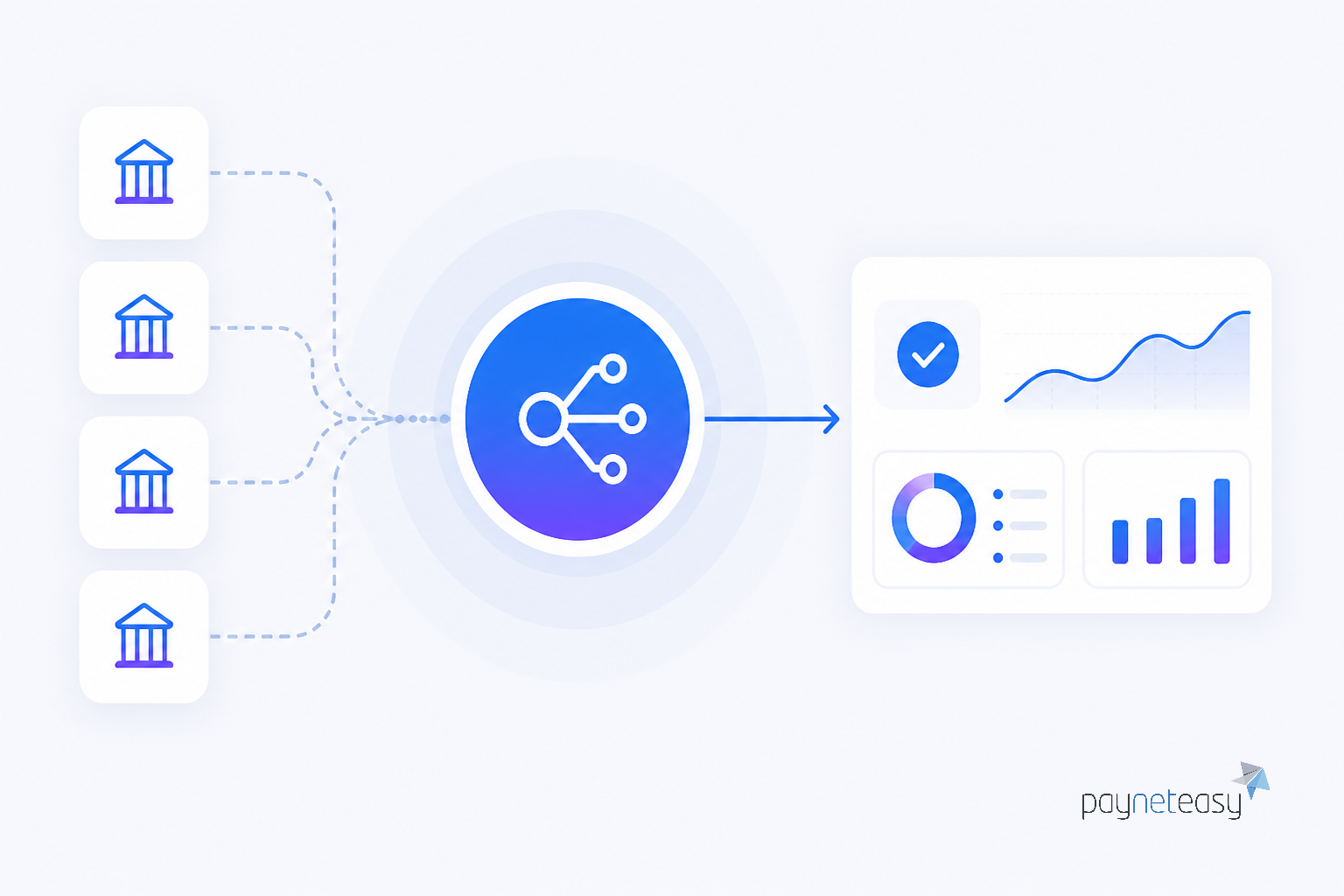
This does not remove judgment. Bad routing rules can still damage performance, and weak monitoring can still miss a provider issue. But orchestration moves the work into a payment operations layer where it belongs, instead of spreading it across checkout code, provider dashboards, finance spreadsheets, and ad hoc scripts.
Essential platform capabilities for managing gateways
The right orchestration setup should be judged by the operating work it removes. It should also be judged by the visibility it creates and the control it gives the payment team over active routes. Capability lists are easy to overstate, so each capability should be tied to a real payment operations job.
Unified API and connection library
A unified API reduces the number of separate provider integrations the merchant has to build and maintain. The value is highest when it is backed by a large, maintained connection library, because the library absorbs provider-specific behavior that would otherwise sit inside the merchant platform. Payneteasy supports more than 1,000 integrations, which means a merchant can evaluate new provider coverage without treating every provider connection as a ground-up build.
The connection library should be practical, not just broad. Payment leaders should ask how provider credentials are added, how test transactions are verified, how status mapping works, and how changes are communicated. A connection that exists on a slide but cannot be tested and monitored, with data that can be reconciled, is not operational coverage.
Intelligent routing and cascading logic
Routing is where multiple payment gateway integration becomes active management. The platform should let payment operations define which route is used for a given payment flow and when a fallback route should be attempted. That logic may consider geography, transaction type, provider availability, or technical decline patterns. The important point is that the team can manage routing without rewriting checkout logic every time traffic needs to move.
Cascading needs tighter control. A second attempt may help when the first failure is technical or route-specific, but broad retry logic can create noise. The platform should let the merchant set clear conditions and then inspect the results by provider, route, country, card BIN, and decline code. If the team cannot isolate the pattern, it may move traffic for the wrong reason.
The W3C work on minimal integration across payment options is useful context here because it shows why common layers matter. A merchant's internal payment architecture should follow the same operating principle: keep provider-specific complexity behind a consistent control surface, while preserving enough data to make route decisions.
Consolidated reporting and analytics
Reporting is often treated as an afterthought, but it is where the payment team learns whether the routing logic is working. A merchant needs one operational view across payment attempts, approvals, declines, refunds, chargebacks, settlement, and reconciliation exceptions. If every provider dashboard tells a different part of the story, payment operations spends too much time normalizing data and too little time acting on it.
Consolidated reporting should support finance as well as payment operations. Settlement and reconciliation data must be traceable and aligned with internal order records, and it must be usable for finance. For high-risk merchants, chargeback visibility is also part of the control model. The goal is not to eliminate chargebacks or promise fixed approval outcomes. The goal is to see the payment flow clearly enough to make controlled decisions.
Security and compliance posture also belong in platform evaluation, without turning the exercise into legal advice. Payneteasy is PCI DSS Level 1 compliant, and that matters because orchestration sits close to sensitive payment operations. A merchant should still run its own compliance review, but the platform layer must be built for the payment data environment it enters.
Getting started with a payment orchestration layer
Implementation should start with the live payment flow, not with a long list of possible providers. Map the current provider connections, the routes that need backup capacity, and the reporting gaps that slow down payment operations. Then define which connections must be active, which ones are candidates for fallback routing, and which data points are required for approval-rate analysis, settlement, reconciliation, and chargeback review.
A sound implementation plan separates connection readiness from routing strategy. First, confirm credentials, transaction types, status mapping, refund handling, settlement files, and operational contacts. Then decide how traffic should move. If those steps are merged, the merchant may send transactions into a route that has not been fully tested in the operating model. For teams building the first checklist, a practical next read is a provider connection readiness checklist, because readiness is where many payment projects become slower than expected.
Payneteasy can achieve a new PSP connection within 5 to 7 business days, but speed only matters when the merchant has already defined what "ready" means. The decision criteria are clear: live payment coverage should be enough to avoid dependency, and control should be strong enough to avoid fragmentation. Reporting also needs to explain why a payment issue happened before traffic is moved.
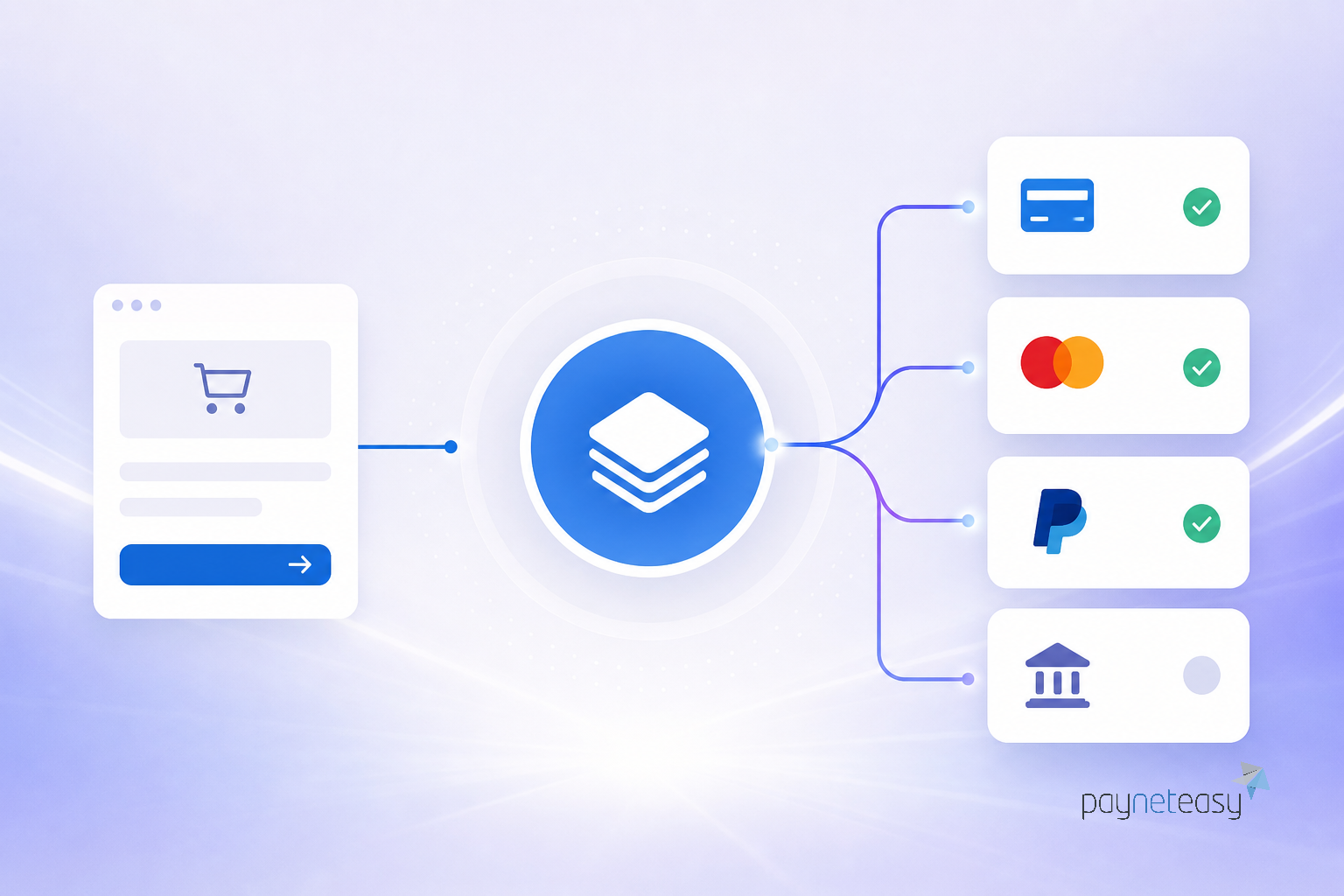
Multiple gateway management is a discipline, not a one-time integration milestone. More connections create more options, and they also create more operating work. The right orchestration layer earns its place when it turns that extra coverage into controlled payment infrastructure rather than another queue of engineering tickets.