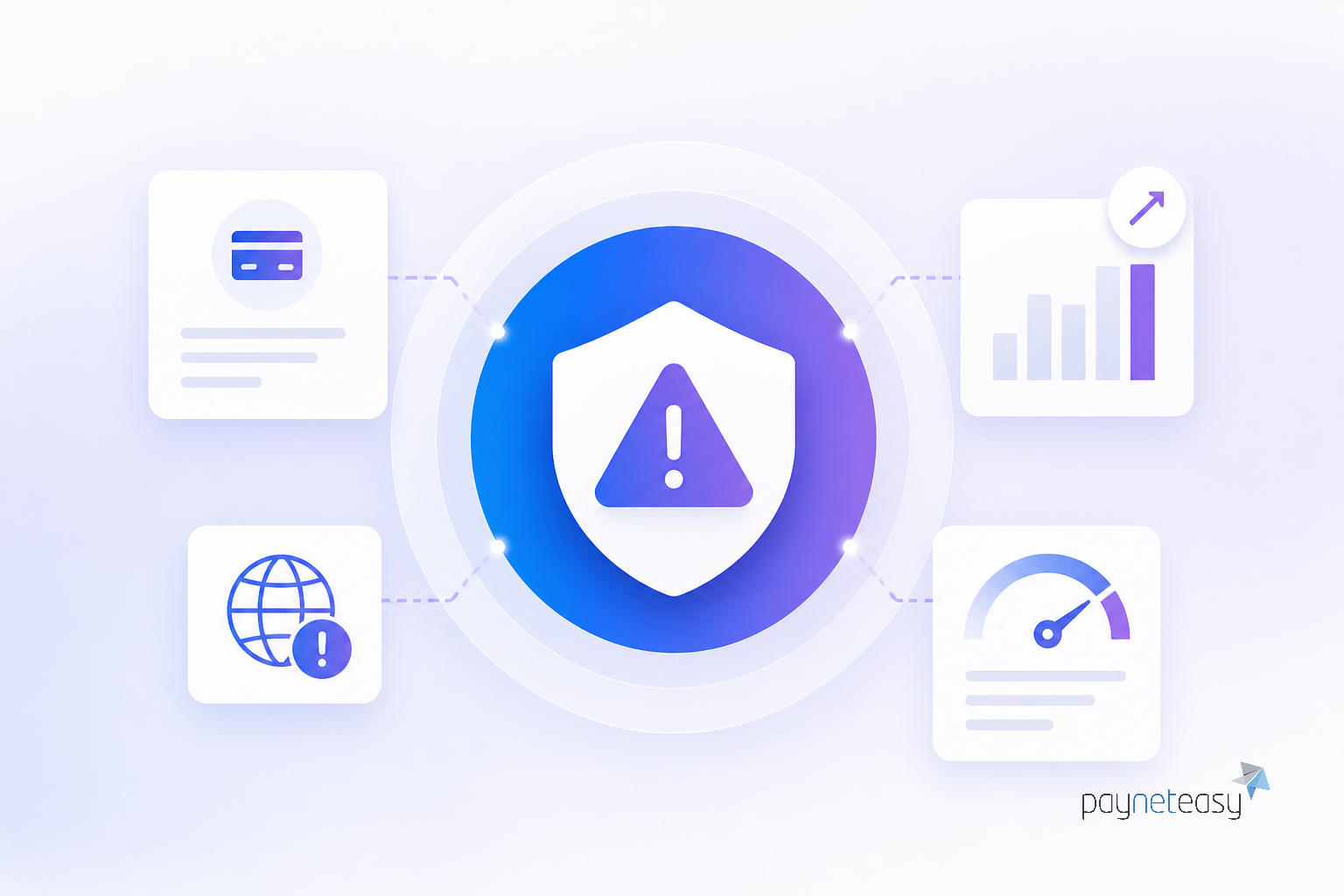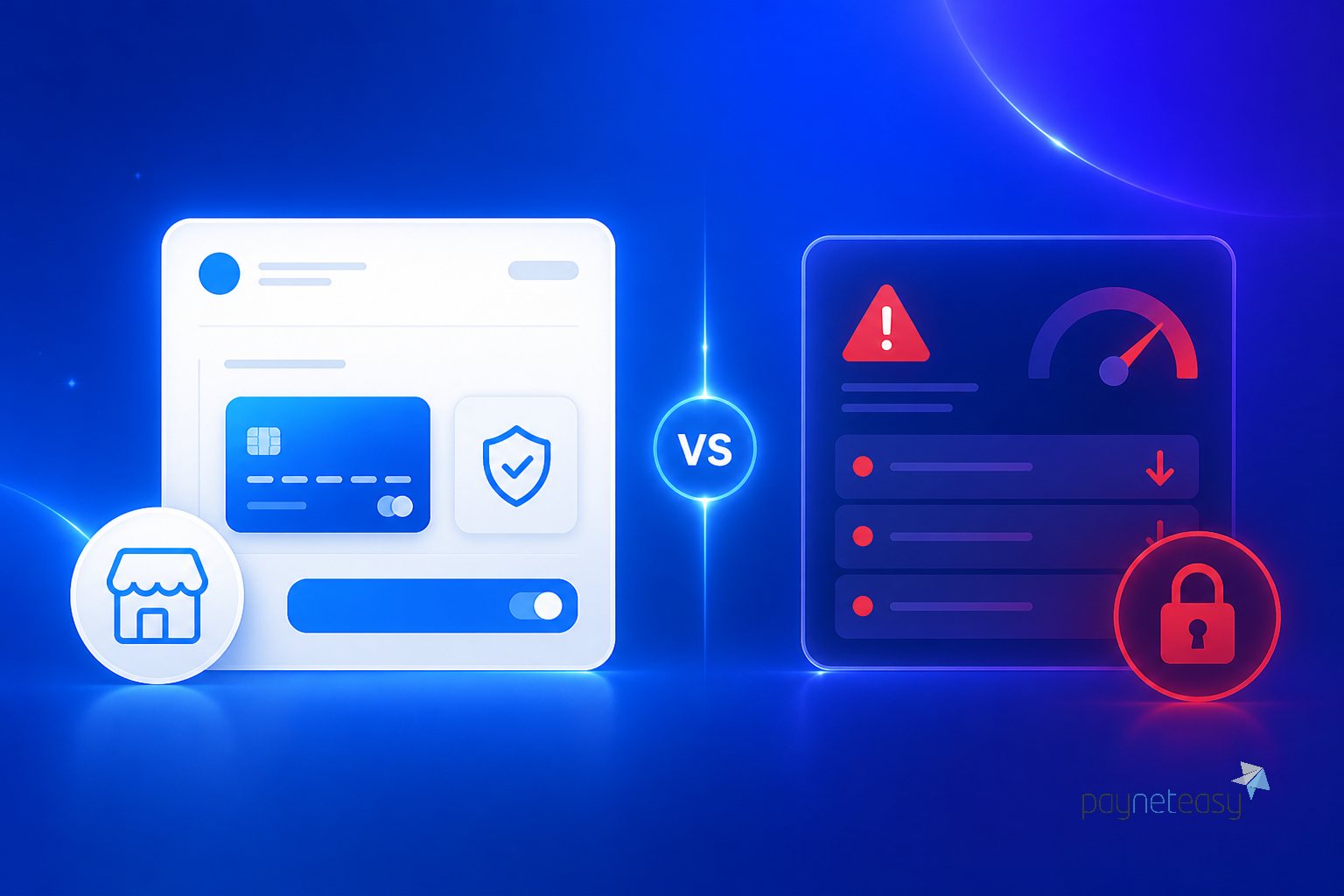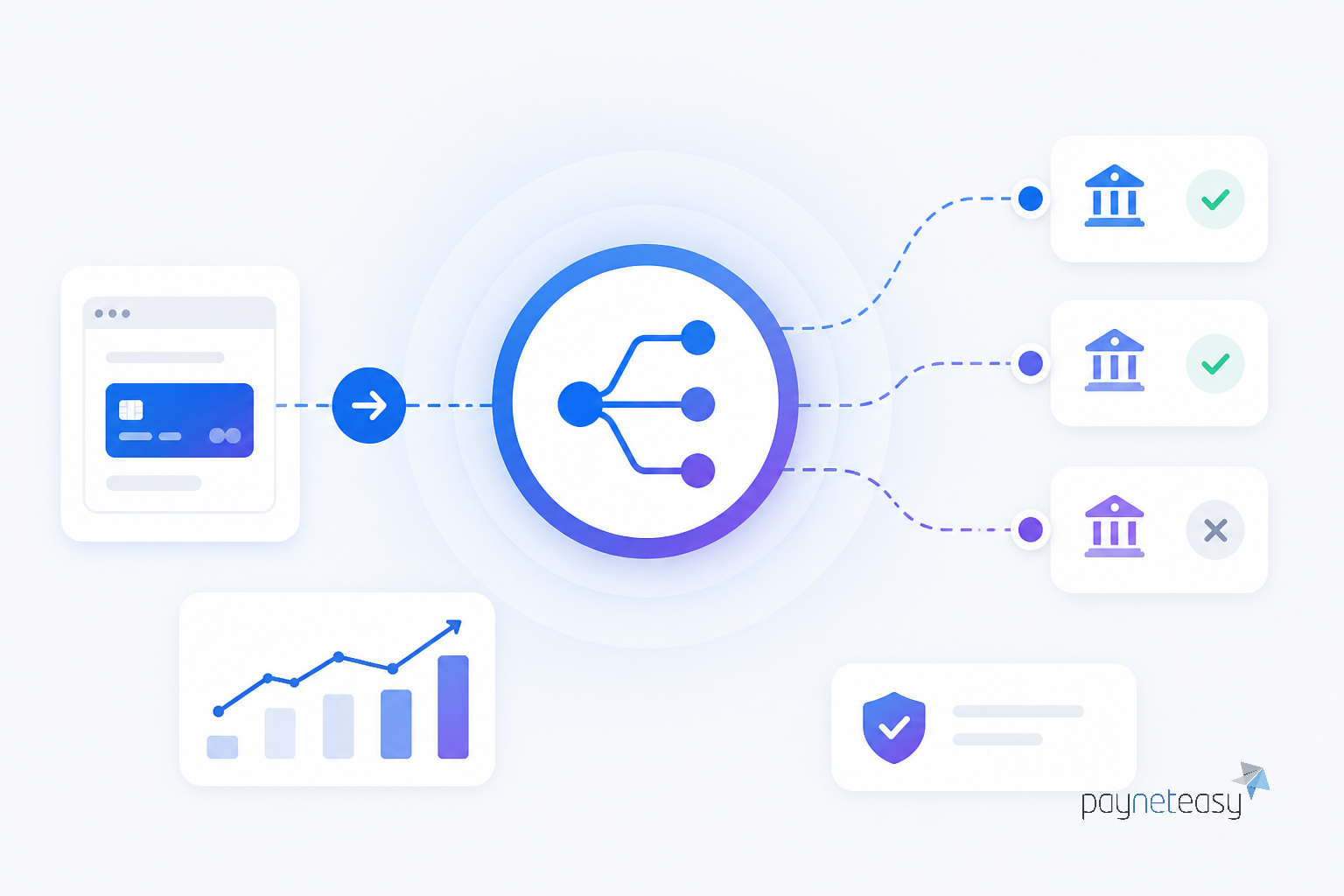

What is smart routing in a payment gateway?
Smart routing in a payment gateway is the rule-based system that sends each transaction through the best eligible processor or acquirer connection. For a high-risk PSP, the trigger is usually practical: a merchant needs more payment coverage or a backup route is not ready. In other cases, payment operations cannot explain why one route is declining traffic while another is still performing.
A smart routing payment gateway does not make payment risk disappear, and it does not promise approval on every transaction. It gives the payment team a controlled way to decide where each transaction should go, using the data available at authorization. That data can include country, card type, currency, amount, merchant account, and provider status. It can also include historical route performance, risk score, decline code patterns, or the need to preserve backup capacity.
The practical value is direct. A high-risk PSP usually runs more than one live provider connection or acquirer connection because one path is rarely enough. Some connections perform better in certain geographies. Some are stronger on specific card types. Some have cost advantages on local rails. Some should be kept as fallback routing when the primary route fails or slows down. Smart routing turns those operational judgments into rules the gateway can execute automatically.
That is why the topic sits inside payment infrastructure, not only checkout optimization. The checkout is where the customer sees the payment attempt, but routing decides how the transaction moves behind it. When the routing layer is weak, the PSP or merchant often reacts late, after an approval rate drop, a change in chargeback exposure, or a reconciliation issue that becomes harder to explain.
Foundations of payment routing
With the definition in place, the next step is the payment infrastructure behind it. A payment gateway sits between the customer-facing payment event and the financial institutions that authorize, clear, and settle the transaction. Academic work on gateway efficiency describes how payment gateways act as intermediaries between customers, merchants, and financial institutions, which is the role smart routing builds on.
In a simple payment flow, the merchant sends a transaction request to the gateway. The gateway passes the request to a processor, PSP, or acquirer connection. That downstream party communicates with the relevant payment rail, which may be a card network, bank, wallet, account-to-account rail, or another method, depending on the transaction. The response then comes back through the same chain, and the merchant receives an approval, decline, or other status.
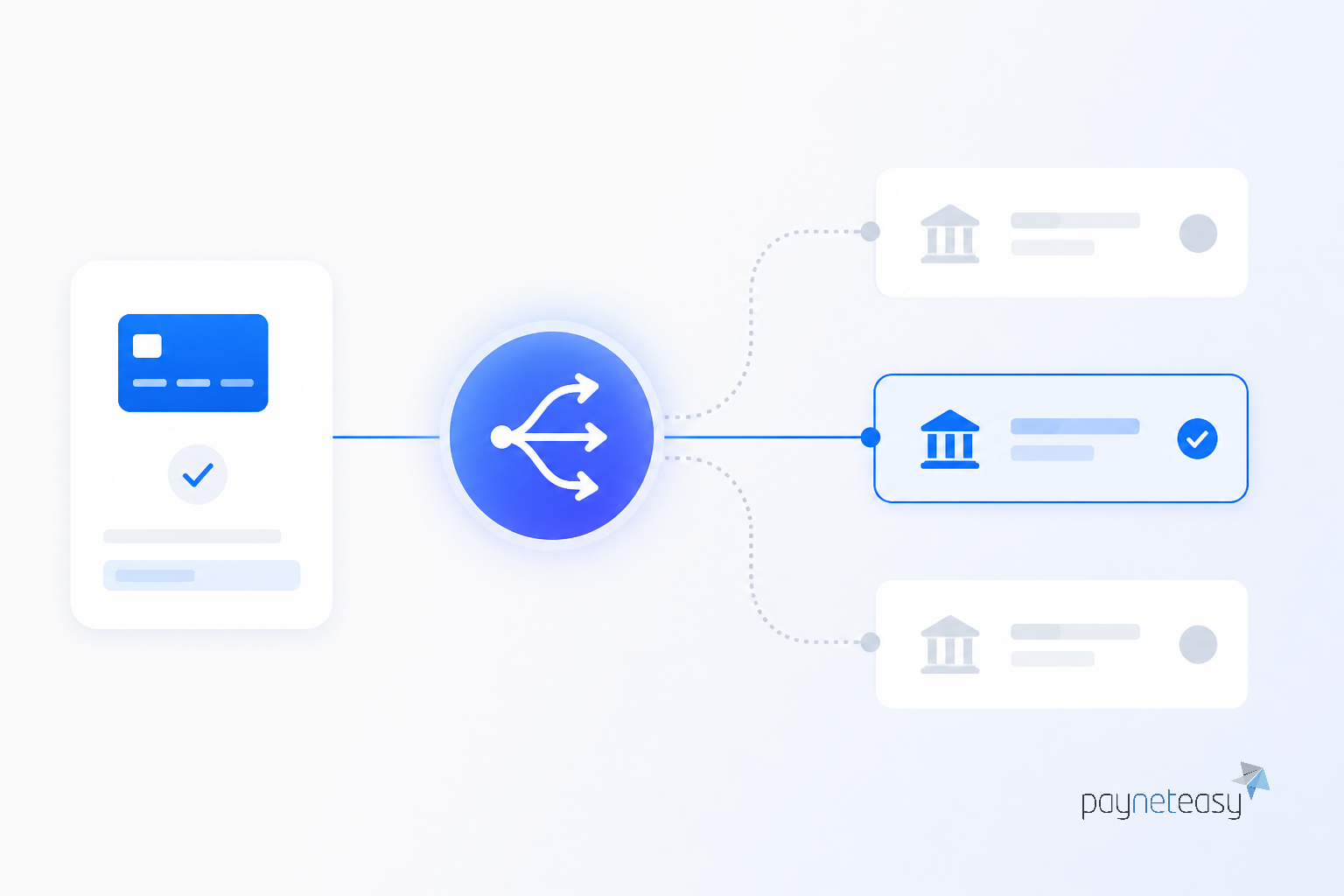
Smart routing adds decision logic before the transaction is sent onward. Instead of treating the first connected provider as the default path for every transaction, the gateway checks the transaction against routing rules. A domestic card may go to one acquirer. A cross-border card may go to another. A transaction above a defined amount may require a route with stronger fraud controls. If a route is unavailable, the payment flow may move to a backup route.
For a high-risk PSP, the point is operational control. High-risk merchants often need live payment coverage across multiple markets and currencies, with business models where approval patterns can change quickly. Direct integrations can connect one merchant to one provider, but they do not automatically create a manageable layer for routing and fallback routing. They also do not solve reporting, reconciliation, or issue diagnosis across many connections.
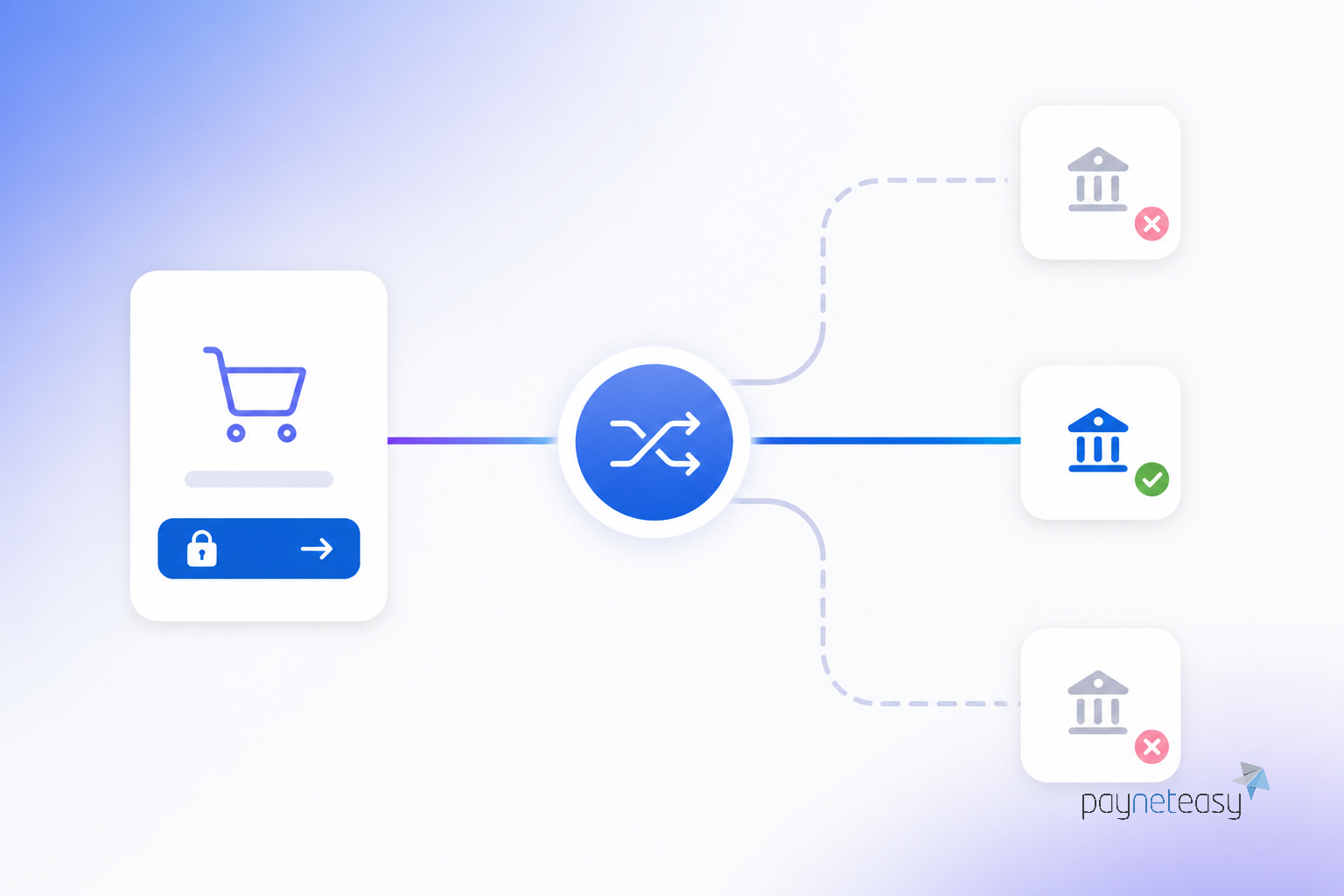
The gateway market has grown because this infrastructure has become central to digital commerce. One research summary valued the global payment gateway market at USD 42.68 billion in 2024 and estimated it would reach USD 52.40 billion in 2025. The same research notes that gateway system efficiency directly influences customer experience and revenue, as well as transaction success rates.
Glossary of payment routing terms
Before going deeper, the terms used in payment routing need to be precise. Payment teams use these words every day, but they are often mixed together in planning discussions, which leads to weak routing decisions.
- Payment gateway, the technology layer that receives transaction requests from a merchant or platform and passes them to connected payment providers, processors, acquirers, wallets, or other rails.
- Processor, the technical party that handles transaction processing between the merchant side and the wider payment network. In some setups, the processor and PSP relationship may be bundled.
- PSP, or payment service provider, the payment business that gives merchants access to payment methods, provider connections, reporting, and operational payment services.
- Acquirer, the financial institution that provides card acceptance services to merchants, directly or through a payment facilitator, and is responsible for acquiring their card transactions. An acquirer connection is the technical integration used to reach that institution.
- Payment rail, the network or method used to move the transaction, such as cards, bank rails, wallets, Pix, UPI, or another local method.
- Routing, the act of choosing the path a transaction takes from the gateway to a downstream provider, acquirer, or payment rail.
- Smart routing, routing controlled by rules, performance data, provider status, transaction attributes, and risk signals rather than a single fixed path.
- Cascading, controlled retry logic that may send a payment through another eligible route after a confirmed unsuccessful attempt, where the response code, issuer guidance, authentication requirements, scheme rules and provider restrictions permit another attempt. An unknown outcome requires a status check and duplicate-payment controls before retrying.
- Fallback route, a live backup route that can receive traffic when the preferred route is unavailable, degraded, or unsuitable for a transaction.
- Approval rate, the share of attempted transactions that receive an approved authorization. It should be analyzed by provider, country, BIN, card type, decline code, merchant, and route.
- Reconciliation, the process of matching transaction records, settlements, fees, refunds, chargebacks, and provider reports so finance and operations can account for payment activity.
- Routing rule, a condition that tells the gateway how to direct transactions, such as "send this country and currency combination to this route unless the provider is unavailable."
Good routing work starts with shared language. Without it, a team may use the same vague label, payment problem, for a provider outage, a BIN issue, a risk decline pattern, or a settlement mismatch. Smart routing helps only when payment operations can name the issue precisely enough to encode a rule or diagnose a route.
How smart routing optimizes payment flows
Once the basic terms are clear, smart routing becomes easier to judge on operational grounds. The gateway collects the transaction request, checks its attributes and route conditions, then sends it to the path that best fits the PSP's operating goal for that transaction. That goal may be higher approval rate or lower processing cost. It may also be stronger fraud control, faster settlement, or preservation of backup capacity.
Maximizing transaction approval rates
Approval rate is usually the first reason a high-risk PSP looks at routing. One acquirer may approve a specific country, BIN range, or card product more consistently than another. A route may also perform differently after a risk model change, a card network rule change, a provider incident, or a merchant traffic shift.
Smart routing helps because route selection becomes specific. Instead of sending all traffic from one merchant to one provider, the PSP can split payment flows by market and currency. It can also route by card type, transaction value, or technical response pattern. If a route shows deteriorating performance or availability, predefined rules can direct new, eligible transactions to another connection while payment operations investigates. Retrying an existing payment requires a confirmed outcome and must follow the response code, issuer guidance, authentication requirements, scheme rules and provider restrictions. A timeout does not confirm a decline: establish the original transaction’s status and apply duplicate-payment controls before retrying.
Research on gateway systems states that gateway efficiency directly affects transaction success rates and business revenue. That matters in high-risk payment operations because a small routing error can look like a demand problem or a checkout problem until the team breaks the data down by route. It can also be mistaken for a merchant quality problem.
Minimizing processing costs and fees
Cost optimization is the second layer. The cheapest route is not always the correct route, and a route with lower fees can be a poor choice if it reduces approvals or delays settlement. It can also create higher dispute handling costs. When multiple eligible routes can process a transaction with acceptable risk and performance, routing logic can favor the lower-cost path.
Local payment rails matter here. McKinsey describes how organizations are turning to dynamic routing software to handle local clearing rules. That reflects a basic operating reality: payment rails are not uniform across markets. A card-led market, an instant-payment market, and a wallet-heavy market may require different routing decisions even when the checkout looks similar to the customer.
For the PSP, the aim is not to chase the lowest fee in isolation. The better question is whether a route fits the transaction type and merchant category. Settlement need, chargeback profile, and local payment expectation also matter. Smart routing gives the team a way to encode that decision rather than leaving it inside spreadsheets, manual reviews, or ad hoc engineering changes.
Reducing fraud and improving security
Fraud control also influences routing. A transaction may need a route with specific authentication support or a stronger risk review step. It may also need different handling for a country, BIN, device, or transaction amount. Routing should work with risk logic, not bypass it.
Mastercard has described AI as becoming embedded in authorization and fraud prevention, enabling adaptive risk scoring and predictive blocking in milliseconds. In practical gateway terms, that means routing engines increasingly use risk signals as part of the decision, instead of treating fraud screening as a separate step after route selection.
For high-risk merchants, this point is often misunderstood. Smart routing is not a way to push bad traffic through more paths until one accepts it. That creates chargeback problems, monitoring issues, and relationship risk. Good routing protects the payment flow by deciding which transactions should go to which path. It also defines which transactions require stronger checks and which should be stopped before they damage a route.
Key routing criteria and logic
To understand how optimization works in practice, the rules behind routing decisions need to be examined closely. A routing engine is only as useful as the criteria behind it. Poor rules can move traffic quickly in the wrong direction, while good rules make the payment flow more stable because they reflect how the PSP actually operates.
Static vs. dynamic routing strategies
Static routing uses fixed instructions. For example, all transactions for a merchant in one country may go to a chosen provider, or all transactions in one currency may go through a defined acquirer connection. Static routing is useful when the payment operation is simple, the route is stable, or the PSP wants predictable settlement and reconciliation.
Dynamic routing changes the route based on live or near-live conditions. It may consider provider availability, approval performance, response time, and risk score. It may also use amount, card attributes, retry history, or local rail availability. McKinsey describes transactions increasingly being handled by software agents that make dynamic routing and execution decisions at machine speed. The payment operations meaning is concrete: a gateway cannot wait for a person to manually choose a path for every transaction.
Most high-risk PSPs need both static and dynamic logic. Static rules keep the structure understandable. Dynamic rules handle operating conditions that change during the day. If all logic is static, the team reacts slowly to outages and route degradation. If all logic is dynamic with weak controls, reporting and reconciliation can become hard to explain.
Common routing rules (geography, card type, value)
Geography is one of the most common routing criteria. Card rails remain deeply established in North America. They also remain deeply established in the United Kingdom and Western Europe, and McKinsey expects autonomous software agents in those markets to route through existing card rails to preserve buyer protections and liability coverage. That supports a card-first approach in many developed card markets, but it does not mean the same logic works everywhere.
In India and Brazil, state-orchestrated account-to-account networks have gained scale. India has Unified Payments Interface, and Brazil has Pix. McKinsey notes that these networks operate with minimal transaction fees and bypass traditional card interchange. For a PSP serving merchants in those markets, routing logic may need to account for local rails, not only cards.
Card type also matters. Credit, debit, prepaid, corporate, domestic, and cross-border cards can behave differently. Routing by BIN range can help isolate patterns, especially when an issuer or card product begins declining at a higher rate. A region can show the same problem. Transaction value is another useful criterion because high-value transactions may need stronger review, a different authentication path, or a route with more suitable limits.
The mistake is treating routing criteria as a one-time setup. Payment rails are fragmenting into regional arenas rather than converging into one global network, according to McKinsey. That fragmentation makes routing maintenance a continuing payment operations function. A high-risk PSP should expect to review rules as merchants expand and providers change their risk posture. Local payment preferences can shift too.
System components: the architecture of a routing engine
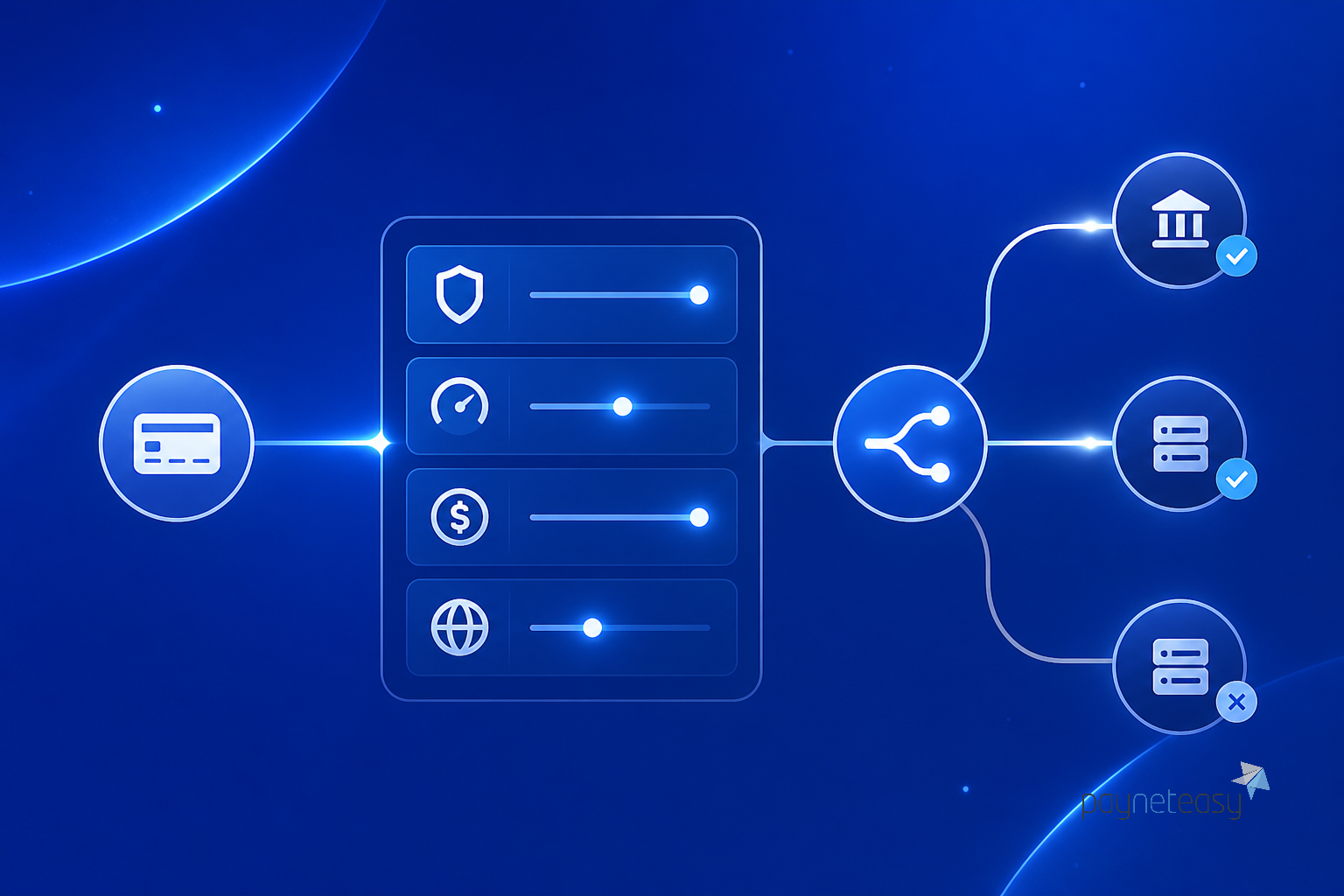
After the routing logic, the next question is the technology that executes it. A smart routing system sits inside a payment gateway or payment orchestration platform and connects several components. These include transaction intake, rule evaluation, provider status monitoring, risk signals, retry logic, reporting, and reconciliation.
The transaction intake layer receives the payment request and standardizes the data needed for routing. That includes merchant identifier, amount, currency, country, and payment method. It also includes card or wallet attributes where available, along with any risk or authentication data passed into the gateway. Without consistent data, routing rules become fragile because each provider may use different formats or response codes.
The rule engine applies the PSP's routing policy. It checks whether a route is eligible and active. It also checks whether the transaction matches a geography or card rule, and whether a fallback route should be used. A monitoring layer then feeds the engine with route availability and performance signals. If a provider connection is timing out, the routing engine needs that signal before the merchant feels a full payment outage.
A payment orchestration platform adds a wider control layer around this logic. Mastercard has described gateways evolving into unified payment experience platforms that combine cards, bank rails, wallets, and biometrics into one flow. McKinsey makes a related point from the infrastructure side, saying value is moving to the underlying control layer for machine identity, consent frameworks, dynamic routing, and policy guardrails. For a PSP, that control layer is where routing rules and provider connections meet operational visibility.
Payneteasy provides white-label payment gateway and payment orchestration technology for PSPs and merchants working with their own payment providers and acquirers. Its routing and balancing system supports transaction-based routing, traffic balancing, limits and cascading across configured connections.
Security and compliance still sit around the routing engine. A routing system handles sensitive payment data and operational metadata, so access control and auditability matter. PCI discipline matters as well. Payneteasy is PCI DSS Level 1 compliant, which is a relevant proof point for the technology layer, but routing itself should still be configured around the PSP's approved provider relationships and risk rules. Reporting responsibilities should be part of that configuration too.
Implementing a smart routing strategy
Once the technology is clear, implementation starts with the live payment flow, not with a long provider list. A high-risk PSP should map merchants, markets, payment methods, provider connections, and acquirer connections before changing routing logic. The same review should cover approval rate by route, decline codes, chargeback exposure, settlement timing, and reconciliation quality.
A high-risk PSP should then identify where routing decisions are already being made manually. If operations moves traffic after a route degrades, if engineering changes provider priorities during incidents, or if merchant onboarding depends on custom payment paths, those decisions belong in a controlled routing strategy. The deeper work is developing a payment routing strategy that defines which rules are allowed and who can change them. It should also define how fallback routing is tested and how each route is measured.
Only then does connection coverage become useful. Payneteasy has more than 1,000 integrations and can establish a new PSP connection within 1 to 2 weeks, which helps when a PSP needs more live payment options without turning every provider connection into a separate engineering project. It also reports 99.95% verified uptime and capacity for up to 10 million transactions per day, which are infrastructure metrics a payment leader should evaluate alongside routing depth and reporting. Reconciliation and operational control should be part of the same review.
The honest trade-off is that smart routing adds discipline as well as flexibility. More routes create more choices, but also more rules to govern and more data to explain. The useful routing setup is the one payment operations can understand during an incident. Finance should be able to reconcile it after settlement, and merchants should be able to rely on it before the primary path has a problem.